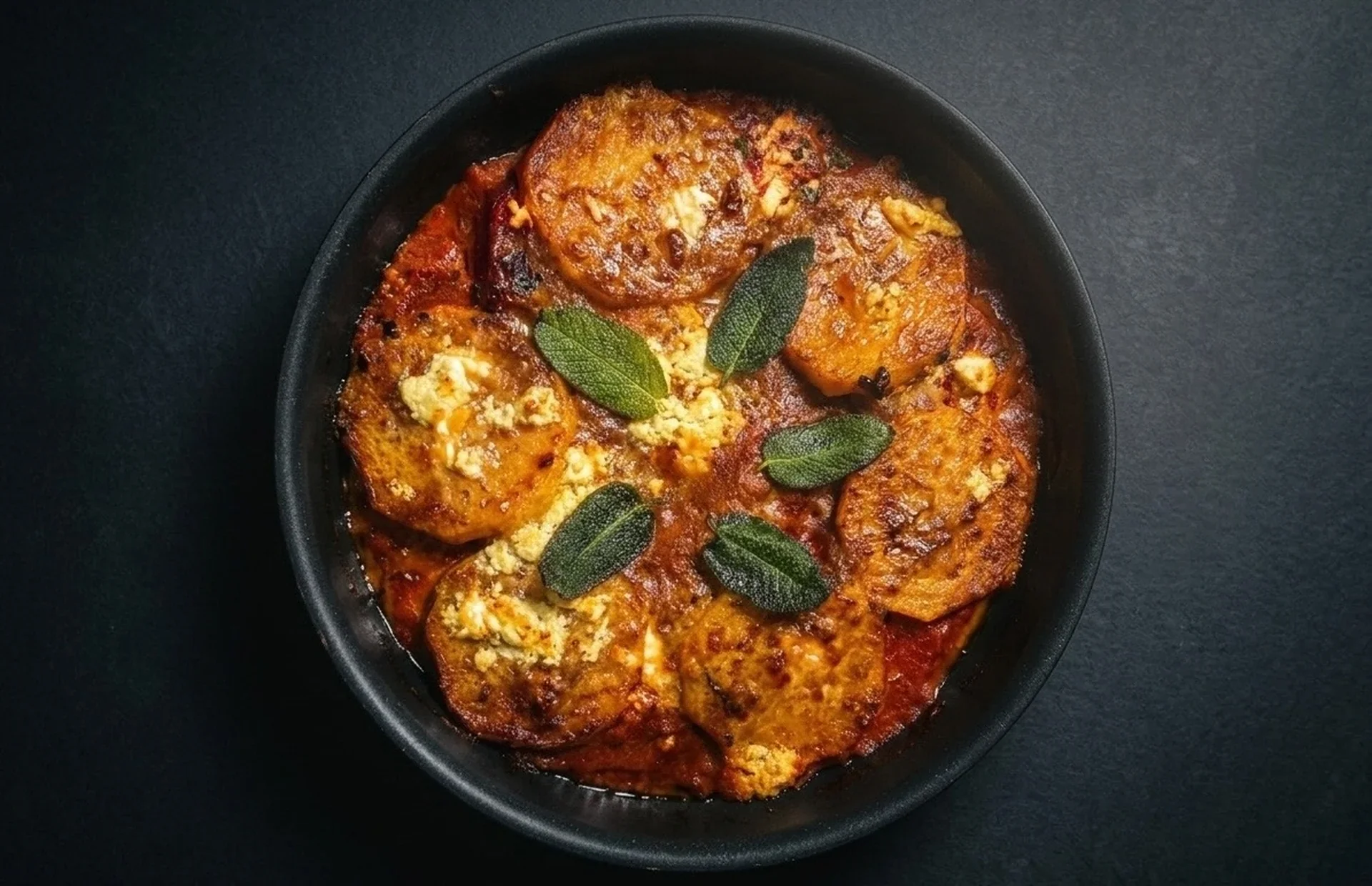
Baked Parmesan Squash Casserole
Golden Creamy Squash Casserole with beetroot, goat cheese and sage. A cozy baked vegetarian dinner for cold days and comfort food cravings.
25 minutes
Prep time
85 minutes
Cook time
Ingredients
- 1/2 medium butternut squash
- 1 beetroot
- 400 g canned tomato juice or tomato purée
- Fresh sage
- 100 g mozzarella
- 100 g goat cheese
- 50 g parmesan cheese
- 2 tbsp olive oil
- 1 tbsp vegetable oil
- 1 tsp garlic powder
- 1 tbsp sugar
- Salt and pepper, to taste
Equipment
- Large saucepan
- Cutting board
- Sharp knife
- Vegetable peeler
- Box grater
- Mixing bowl
- Ovenproof baking dish
- Aluminum foil
- Small skillet
- Spoon or spatula
Instructions
There are some dishes that instantly make cold weather feel more welcome, and this Baked Parmesan Squash Casserole is one of them for me.
It is rich, comforting, deeply savory, and exactly the kind of recipe that makes autumn and winter cooking feel exciting rather than repetitive.
I have been making this dish for a couple of years now, and every single time it reminds me why butternut squash recipes deserve so much more love beyond soups and simple roasted trays.
What makes this one special is the contrast between the natural sweetness of squash, the earthy bite of beetroot, the tangy depth of goat cheese, the richness of mozzarella and parmesan, and the fragrant finish of crispy sage.
It is cozy, a little rustic, and still elegant enough to feel special. If you are looking for a vegetarian squash casserole, a beautiful cold-season dinner, or simply a new way to enjoy butternut squash with goat cheese, this recipe is absolutely worth trying.
Instructions
Prepare the Tomato Sauce
- Start by transferring the canned tomatoes to a saucepan. Crush them with your hands if using whole tomatoes, or simply pour in the purée if that is what you have on hand.
- Add the olive oil, garlic powder, sugar, salt, and pepper. Let everything simmer over low heat for a few minutes, just until the sauce becomes slightly more concentrated and the flavors come together. Once ready, remove it from the heat and set it aside.
- This quick sauce gives the dish body, acidity, and just enough sweetness to balance the earthy vegetables and rich cheeses. It is simple, but it plays a very important role in this savory squash bake.
Slice the Vegetables and Prepare the Cheese
- Cut the squash in half. For this recipe, you will only need one half, so wrap the other half well and keep it in the fridge for another dish.
- Remove the seeds from the half you are using, then peel it. A vegetable peeler works very well here. Slice the peeled squash into pieces about 1 cm thick.
- Peel the beetroot and slice it into similar pieces. If you do not enjoy beetroot with a slight bite, you can parboil it for a few minutes before assembling the casserole.
- Next, grate the mozzarella and parmesan and mix them together in a bowl. Crumble the goat cheese separately, because it will be layered in a more delicate way throughout the dish.
Assemble and Bake the Casserole
- Preheat your oven to 200°C (400°F).
- Take an ovenproof baking dish and spread a thin layer of tomato sauce across the bottom. This first layer helps prevent sticking and starts building flavor right away.
- Add a layer of squash slices, followed by some beetroot. Spoon over more tomato sauce, then sprinkle some of the mozzarella and parmesan mixture on top. Finish that layer with crumbled goat cheese and 2–3 chopped sage leaves.
- Repeat the layering process until all the ingredients are used, finishing with cheese on top.
- Cover the dish with foil and bake for 1 hour.
- After that, remove the foil, increase the oven temperature to 220°C (430°F), and bake for another 15 minutes, or until the top becomes beautifully golden and bubbling.
- Once baked, let the casserole rest for 10 minutes before serving.
- Meanwhile, make the crispy sage. Heat the vegetable oil in a small skillet, then fry the sage leaves one by one for about 10 seconds each, just until crisp. Drain them on a paper towel.
- Serve the casserole topped with the crispy sage leaves.
Why This Recipe Became a Favorite in Our Home
This Baked Parmesan Squash Casserole came into our kitchen the way many of the best recipes do: by combining ingredients we already loved and slowly turning them into something that felt comforting, practical, and worth repeating every cold season.
I have always had a soft spot for butternut squash recipes, especially those that allow squash to be more than just a supporting ingredient. In many homes, squash ends up blended into soups, mashed into purées, or roasted as a side.
All of those are delicious, of course. Still, I wanted something heartier and more layered, something that could sit proudly in the center of the table.
One of the biggest inspirations behind this dish is clearly the spirit of Parmigiana, especially Eggplant Parmesan.
The idea of layering vegetables with tomato sauce, cheese, and aromatic herbs is one of those timeless Mediterranean cooking principles that continues to inspire modern home cooks. Traditional Parmigiana is most often associated with eggplant, but its structure is incredibly adaptable. Once you understand the balance between acidity, richness, sweetness, and texture, you can start applying the same logic to other vegetables. That is exactly what happened here.
The squash brings sweetness and softness. The beetroot adds earthiness and color, making the casserole more visually interesting and more complex in flavor. The tomato sauce offers acidity and brightness, while the mozzarella and parmesan provide that bubbling, golden, deeply satisfying finish. But the ingredient that truly shaped the identity of this dish in our home is goat cheese. We discovered quite early on that butternut squash with goat cheese is one of those combinations that feels almost inevitable once you taste it. The tanginess of goat cheese cuts through the natural sweetness of squash in a way that keeps the dish from becoming heavy or flat.
The sage also matters more than it may seem at first glance. Sage is one of those herbs that feels tied to autumn and winter cooking. Its slightly peppery, resinous, earthy character works beautifully with squash, cheese, and tomato. Frying it until crisp transforms it into more than a garnish. It becomes a final textural contrast that makes every serving feel more complete.
What I love most is how this recipe reflects the way cooking evolves at home. It is not about copying a traditional classic exactly as it was. It is about understanding what made that classic work and then adapting it to your own tastes, your own pantry, and your own cravings. That is how this dish became part of our table, and that is also why it has stayed there.
Flavor Influences Behind This Dish
The flavor direction of this casserole comes from a mix of Italian-inspired layering and seasonal home cooking. You can taste the influence of parmigiana-style baking, where vegetables, tomato sauce, and cheese are assembled in layers and baked until everything melts together.
At the same time, the use of squash, beetroot, goat cheese, and sage pushes the recipe into a more autumnal, slightly rustic direction.
There is also something very homey about it. It is not meant to be overly refined or minimalist. It is meant to be generous, fragrant, golden, and spoonable. That is exactly the kind of food that works best when the weather outside is cold and grey.
How We Adapted It in Our Kitchen
The original idea behind a baked vegetable-and-cheese casserole is not new. Still, the way we make it at home gives it its own identity. Instead of using eggplant, we chose squash because of its creamy texture and natural sweetness.
We introduced beetroot for earthiness and color. We also made goat cheese a central part of the recipe rather than an optional extra, because it gives the dish a sharper, more interesting profile.
Another adaptation is the crispy sage. It may seem like a small detail, but it changes the final result a lot.
Without it, the casserole is delicious. With it, it becomes memorable. That little crunchy, aromatic topping lifts the whole dish and makes it feel more complete.
This is exactly how many home recipes are born: not from trying to reinvent food completely, but from paying attention to what makes familiar combinations feel exciting again.
Nutritional and Seasonal Notes
This butternut squash casserole is particularly suited for the colder months because it combines comforting textures with ingredients that are naturally associated with autumn and winter. Squash is filling but not heavy in the same way a meat-based bake can be, and that makes it a wonderful option when you want comfort food that still feels vegetable-forward.
Because it contains several cheeses, it also has a good amount of protein and fat, which helps make it satisfying as a standalone meal. Pair it with a green salad if you want something fresher alongside it, or serve it on its own when you want a truly cozy dinner.
It is also a good reminder that seasonal cooking does not have to mean bland cooking. In fact, recipes like this prove the opposite. Cold-weather produce can be layered, baked, crisped, and transformed into dishes that feel rich, beautiful, and full of personality.
FAQ
If you are planning to make this Baked Parmesan Squash Casserole, these are some of the most useful questions you might have before you start.
Q: Can I make this butternut squash casserole in advance?
A: Yes. You can fully assemble the casserole a few hours ahead, cover it, and keep it in the fridge until ready to bake. You can also bake it in advance and reheat it gently before serving.
Q: What can I use instead of goat cheese?
A: If you do not like goat cheese, you can replace it with more mozzarella and parmesan, or even use a cheese mixture similar to the one used in Eggplant Parmesan. The flavor will be milder, but still delicious.
Q: Do I need to precook the beetroot?
A: Not necessarily. If your beetroot slices are thin enough, they will cook in the oven. However, if you prefer them fully soft rather than slightly firm, parboiling them for a few minutes is a good idea.
Q: Can I freeze this vegetarian squash casserole?
A: Yes, although the texture may soften slightly after thawing. For the best result, freeze it after baking and cooling, then reheat in the oven until hot throughout.
Q: What should I serve with this savory squash bake?
A: It works beautifully with a crisp green salad, peppery arugula, or even some toasted bread. But honestly, it is rich and satisfying enough to be served on its own.
Conclusion
I really hope you will give this Baked Parmesan Squash Casserole a try, because it is one of those dishes that truly deserves a place in your cold-season cooking rotation. It is comforting, flavorful, beautifully layered, and packed with all the things that make cozy dinners feel special. If you make it, I hope you will test this dish and tag us along when you do, so we can see your version. Also, the full video of the recipe is available on YouTube, so make sure to check it out, and do not forget to like and subscribe.
Nutrition Facts / Serving
- Calories: 423
- Total Fat: 26 g
- Cholesterol: 44 mg
- Sodium: 539 mg
- Potassium: 1046 mg
- Total Carbohydrate: 29.6 g
- Sugars: 13.6 g
- Protein: 20.6 g