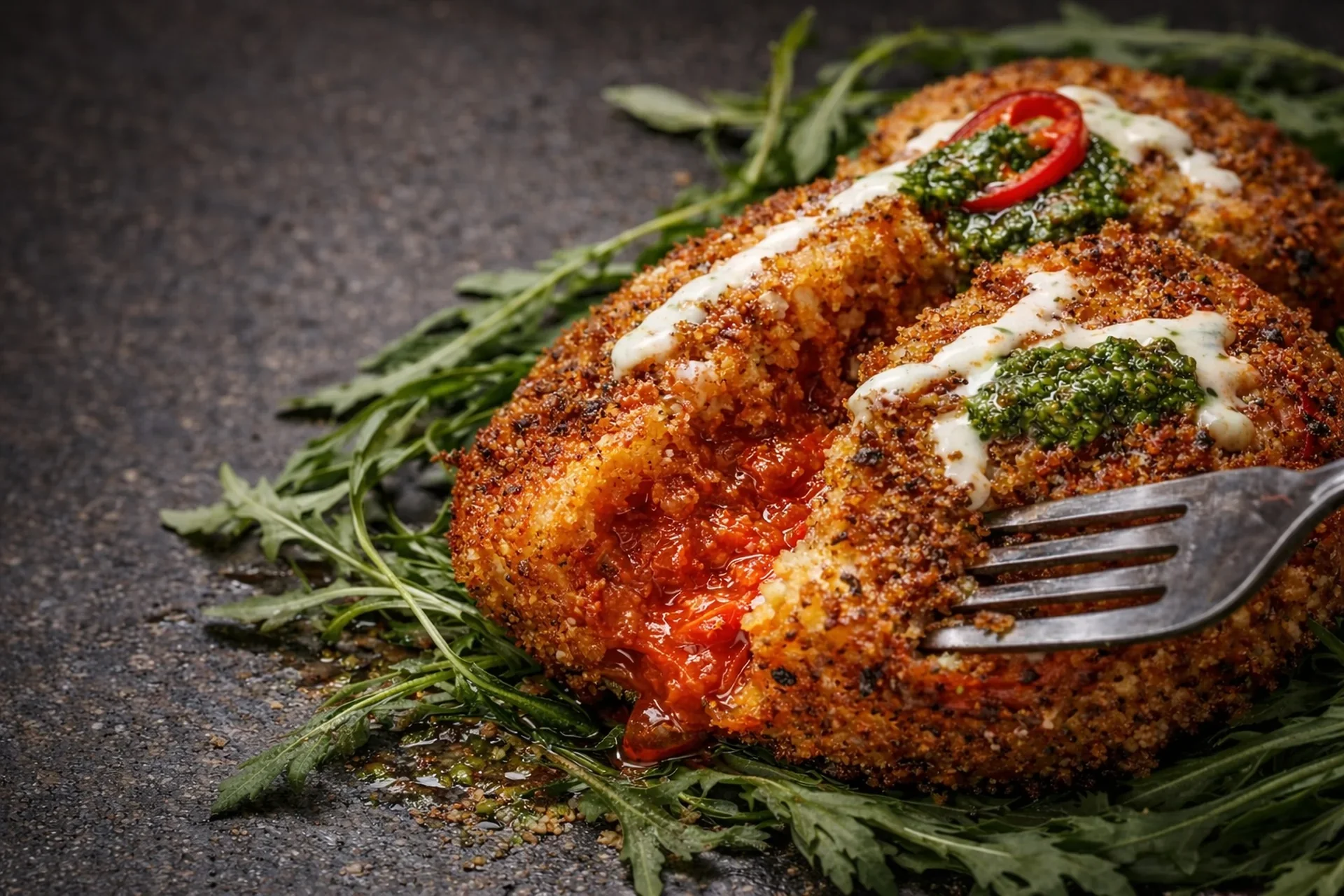
Crispy Fried Tomatoes
Crispy fried tomatoes with a juicy center, inspired by a 1963 Romanian recipe and adapted for modern flavor and texture.
20 minutes
Prep time
10 minutes
Cook time
Ingredients
For the tomatoes
- 3 large, firm tomatoes
- 80–100 g panko breadcrumbs
- 1/2 teaspoon granulated garlic
- Salt
- Black pepper
- Garlic powder
- Oil for frying
- 3-4 tablespoons soy milk
- 3 tablespoon flour, for the slurry
For the dressing
- 60 ml soy milk
- 2 tablespoons olive oil
- 1–2 tablespoons lemon juice
- 1 tablespoon nutritional yeast
- Salt
For the green sauce
- 15 g parsley
- 5 g wild garlic
- Finely grated zest of 1/2 lemon
- 1 tablespoon olive oil
- Hot peppers to taste (optional)
- A small pinch of salt
For the base and finish
- 1–2 handfuls arugula
- 1 tablespoon olive oil
- 1 teaspoon lemon juice
- 2 tablespoons seeds, such as pumpkin or sunflower
- Salt
- Black pepper
- Optional: fresh chili
Equipment
- Frying pan (preferably heavy-bottomed)
- Mixing bowls
- Plate with paper towels
- Immersion blender or small blender
- Knife
- Cutting board
- Tongs or spatula
Instructions
It’s time to take another old recipe and adapt it to our modern needs and ways of cooking. Today, I’ve chosen a Romanian dish from the 1963 edition of Carte de Bucate by Rada Nicolaie, Maria Iliescu, and Elena Baltag. As always, I tried to modernize the recipe without taking away its authenticity. Let’s see what I changed.
This is my updated take on a very simple but surprisingly charming dish: fried tomatoes. The original version is rustic, direct, and very much built around the home cooking logic of its time. My version keeps that core idea alive, but adds more structure, more texture, and a more balanced finish. Instead of serving the tomatoes simply with parsley and garlic sauce, I turned them into a composed plate with peppery arugula, a light lemony dressing, a fresh green herb sauce, and seeds for crunch.
The result still feels Romanian in spirit, but it also feels more at home in a modern kitchen and on a modern table. If you enjoy crispy fried tomatoes, Romanian tomato recipes, or an old recipe modernized, this is a beautiful one to try.
Instructions
Prepare the tomatoes
- Cut the tomatoes into thick slices, about 1.5 to 2 cm thick.
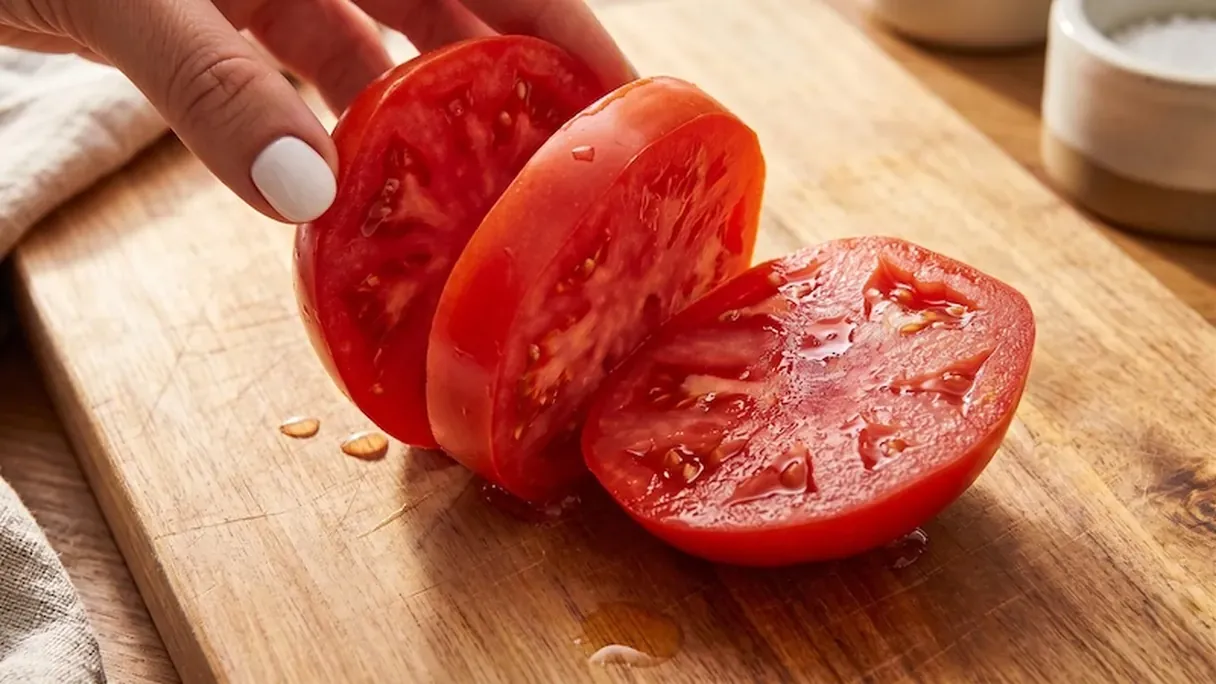
- Sprinkle them with salt and leave them on paper towels for 15 to 20 minutes.
- Then pat them very well with more paper towels.
- This is the key step: the surface should be as dry as possible.
Coat the tomatoes
- For the recommended method, make a quick slurry by mixing the soy milk and 1 tablespoon of flour until it has the consistency of thin yogurt. As a note, if you don't want to keep them vegan, use an egg wash instead.
- Season the panko with the granulated garlic, a little salt, and black pepper.
- Coat each tomato slice with the slurry.
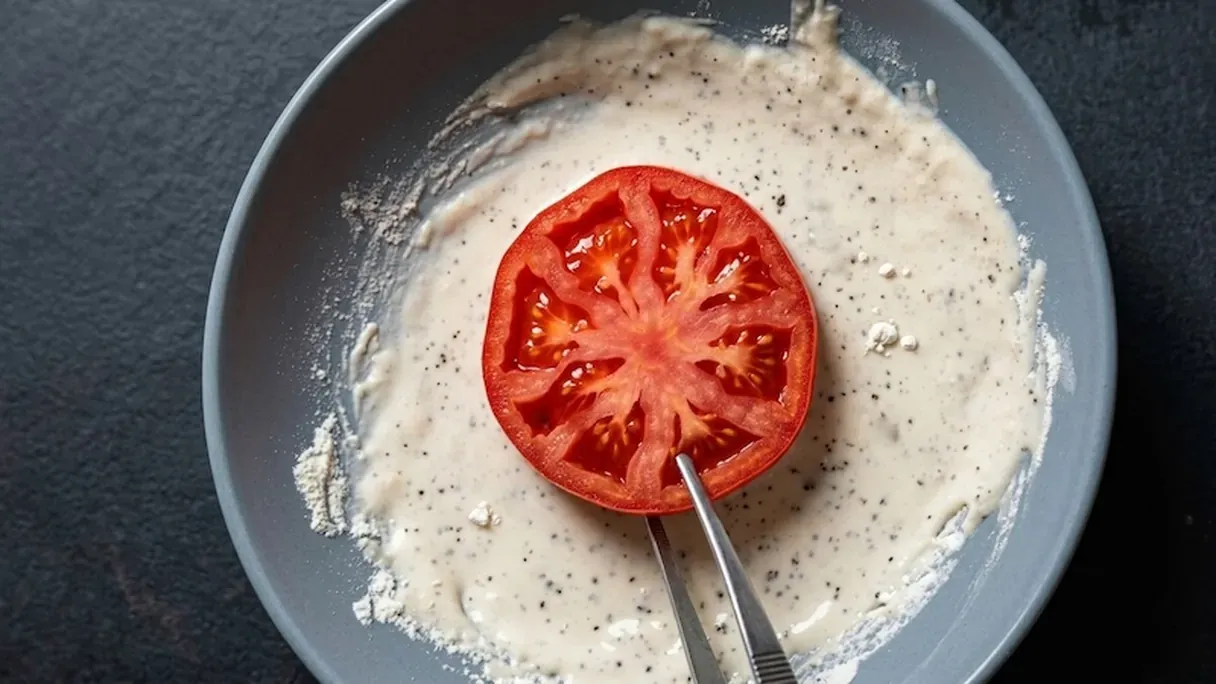
,
- Then coat it in the panko. Press the breadcrumbs well, so they adhere properly.
Fry the tomatoes
- Heat oil in a frying pan over medium to medium-high heat.
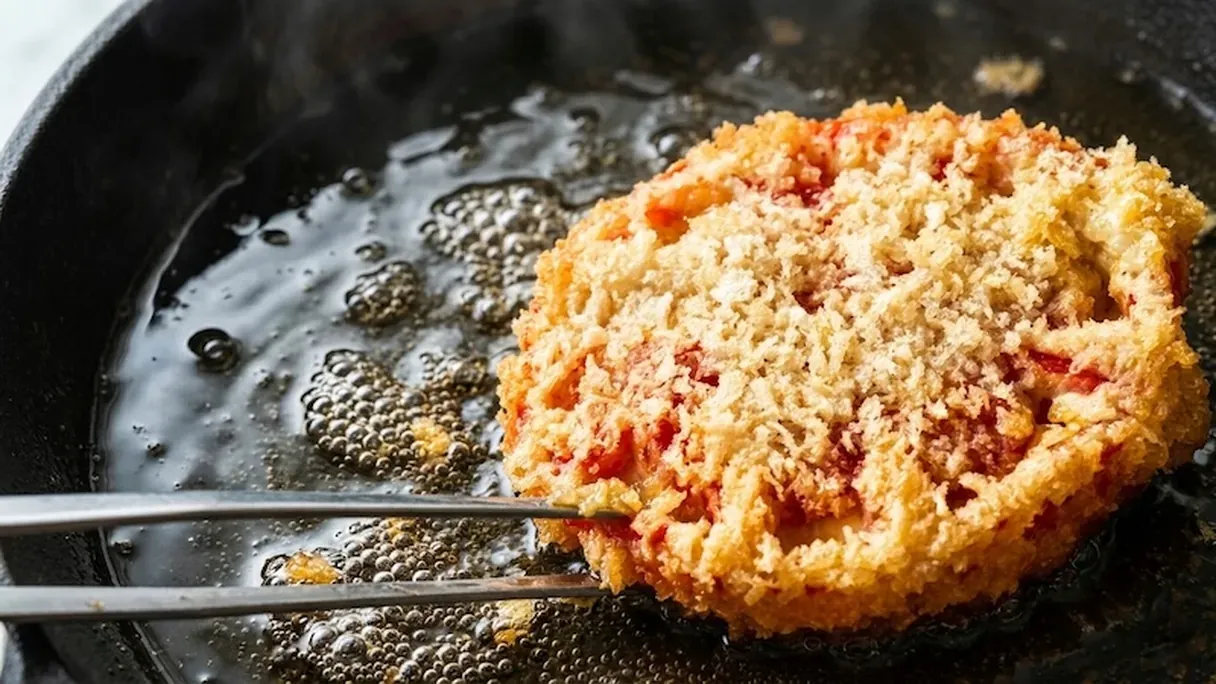
- Fry the tomatoes for 2 to 3 minutes on each side, until golden and crisp.
- Transfer them to paper towels.
Make the dressing
- Using an immersion blender, blend the soy milk, olive oil, lemon juice, nutritional yeast, and salt.
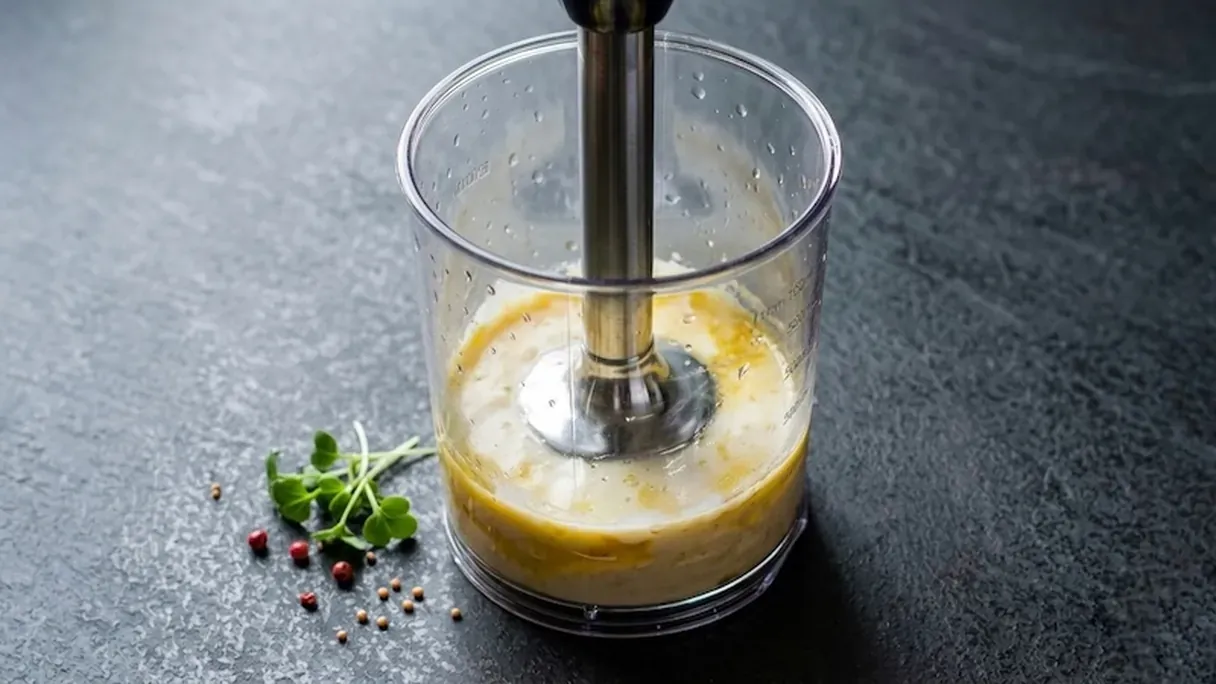
- The dressing should be lightly creamy and fluid, but not watery.
Make the green sauce
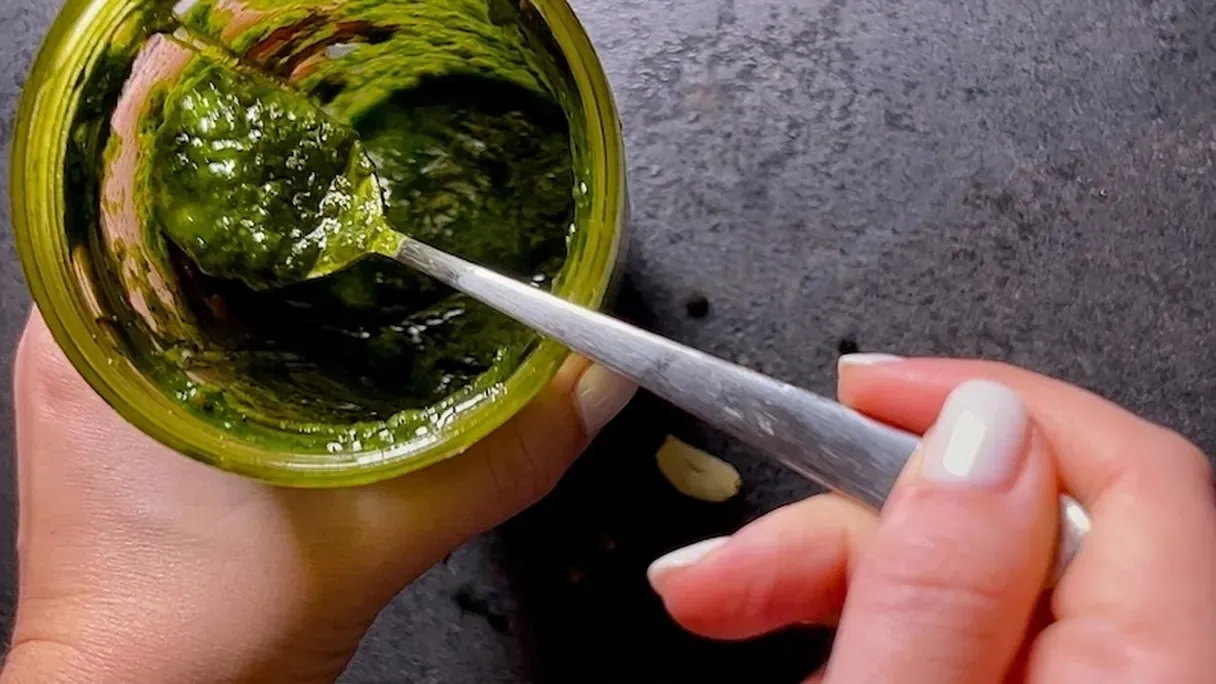
- Blend the parsley and wild garlic very finely, then mix with the lemon zest, olive oil, and a pinch of salt.
Season the arugula
- Dress the arugula lightly with olive oil, lemon juice, salt, and black pepper.
Assemble the dish
- Start with the arugula as the base. Place the crispy tomatoes on top without burying them in the greens. Add a controlled drizzle of the dressing, spoon the green sauce over the tomatoes, and finish with the seeds for crunch. Add fresh chili on top if you like a little heat.
This version works well as a starter, a light lunch, or part of a summer table. It also fits naturally into the kind of crispy tomato appetizer or fried tomato salad that feels both nostalgic and fresh.
The Original Recipe and a Few Historical Notes
I will leave the original recipe here as well, so you can try it exactly as it was before trying our version:
Fried Tomatoes
8 large tomatoes, 3–4 garlic cloves, 150 g oil, 1 bunch parsley, salt
Cut the tomatoes into thicker round slices, salt them, and leave them for 30 minutes. Then coat them in flour and fry them on both sides in hot oil. Sprinkle finely chopped parsley over them and drizzle with garlic mujdei. Serve hot or cold.
This kind of recipe tells us a lot about mid-20th-century home cooking. It is economical, seasonal, and practical. It uses very few ingredients, but each one has a clear role: tomato for juiciness, flour for protection, oil for cooking, parsley for freshness, and garlic for punch.
The fact that it can be served hot or cold also suggests a flexible household dish rather than a rigid plated preparation.
A few useful historical and culinary facts you can add to the article:
- Tomatoes became major ingredients in Romanian cooking relatively late compared with older native staples, but by the 20th century, they were already central to summer cooking and household vegetable dishes.
- Romania has long had significant vegetable cultivation, including tomatoes, onions, peppers, and cabbage.
- Cooking tomatoes with oil is not just delicious; it also improves the absorption of lycopene, one of the best-known tomato antioxidants.
- Breadcrumb-coated fried tomatoes have many international cousins. A famous example is fried green tomatoes in the United States, though that dish is usually made with unripe tomatoes and often uses cornmeal rather than breadcrumbs.
What I Changed and Why
Keeping the Original Idea Intact
The original recipe is very straightforward: thick tomato slices are salted, left to rest, dredged in flour, fried in hot oil, then finished with chopped parsley and garlic mujdei. It is a classic old-school approach, and it makes perfect sense in the context of Romanian home cooking from the 1960s: minimal ingredients, strong flavors, and a method built around what people already had in the pantry.
My version keeps that central idea intact. This is still very much a fried tomato dish. The goal was never to make it unrecognizable, but to preserve the spirit of the original while adapting it to the way many of us cook and plate food today.
A More Reliable Crisp Coating
The first major change is the coating. Instead of flour alone, I used panko and a light soy milk slurry. This gives the tomatoes a much more reliable crust and a crispness that feels intentional rather than incidental.
Flour-only frying can absolutely work, but tomatoes are delicate and full of water. A breadcrumb coating helps protect them better during frying, creates a sturdier result, and gives the dish a more defined texture. It also makes the final plate look more polished and satisfying.
A More Layered Finish
The second big change is the finish. The original uses parsley and mujdei, which bring freshness and punch, but I wanted a more layered and balanced result.
So instead of relying on one sharp garlic finish, I split that role into two components: a creamy lemony dressing and a green herb sauce made with parsley, wild garlic, and lemon zest. That combination brings acidity, brightness, creaminess, and aromatic freshness in a more controlled way. Wild garlic also gives a softer, greener garlic note than a raw mujdei, which makes the dish feel fresher and more nuanced.
A Broader Nutritional and Practical Upgrade
Nutritionally, the updated version also shifts the dish. The original is essentially fried tomato plus garlic oil, which can be delicious but somewhat one-note. In the new version, arugula adds bitterness and freshness, seeds contribute texture and healthy fats, and the dressing brings flavor without relying on dairy.
Tomatoes are also especially interesting here because cooking them with oil can improve the body's ability to absorb lycopene, the carotenoid most associated with tomatoes. So even though this is still an indulgent dish in spirit, it also gains a little more balance and depth through the added greens, seeds, and layered finish.
Why This Kind of Modernization Matters
There is also a broader historical logic behind this dish. Tomatoes entered European cooking relatively late and took time to become fully accepted as an everyday food. By the mid-20th century, though, they had clearly become important enough in Romanian cooking to appear in practical household recipes like this one.
That is why I find this type of modernization so interesting. It is not about making an old recipe trendier for the sake of it. It is about preserving the original idea while improving crispness, balance, presentation, and overall usability for the way many of us cook and eat now.
Frequently Asked Questions
If you want to include a practical FAQ section in the article, here are five useful questions readers are likely to have before trying this recipe.
Q: Can I make these fried tomatoes without panko?
A: Yes. You can make them with flour only, which is closer to the original recipe, but the crust will be thinner and less crisp. Panko gives a more textured and reliable finish, especially for juicy tomatoes.
Q: What kind of tomatoes work best for this recipe?
A: Use large, firm tomatoes that are ripe but not overly soft. If the tomatoes are too watery or too fragile, they will be harder to coat and fry properly. This matters a lot if you want truly crispy fried tomatoes.
Q: Can I make this recipe fully vegan?
A: Yes, and this version already is. The slurry uses soy milk instead of egg, and the dressing gets creaminess from soy milk and nutritional yeast rather than dairy.
Q: Why do I need to salt and dry the tomatoes first?
A: Salting helps draw out excess moisture. That makes the tomatoes easier to coat and helps the crust stay attached during frying. It also concentrates flavor.
Q: Can I bake or air fry the tomatoes instead of frying them in oil?
A: You can, but the result will be different. Frying gives the best color and the most even crust. Air frying may work better than baking, especially if you spray the coated tomatoes lightly with oil first.
Conclusion
This is the kind of recipe I love most: simple, old, clever, and full of potential. The original version has all the honesty of a practical Romanian home recipe, while the updated one brings a little more contrast, structure, and brightness to the plate. It is still recognizably the same dish, just adapted to the way many of us like to cook and eat today.
That is always the goal with these old recipes: not to erase them, and not to make them trendy for the sake of it, but to understand what made them work in the first place and then rebuild them carefully for a modern kitchen.
The full video for this recipe is available below and on our YouTube channel, so don't forget to like and subscribe for more
Nutrition Facts / Serving
- Calories: ~220 kcal
- Total Fat: ~14 g
- Cholesterol: 0 mg
- Sodium: ~220 mg
- Potassium: ~450 mg
- Total Carbohydrate: ~18 g
- Sugars: ~7 g
- Protein: ~3 g