Dreamy Madeleines Done Easy
Classic French madeleines with a soft buttery crumb and the perfect hump. Easy to make, elegant to serve, and ideal for coffee or tea.
15 minutes
Prep time
10 minutes
Cook time
Ingredients
- 125 g all-purpose flour
- 40 ml milk
- 100 g butter, melted
- 100 g sugar
- 2 eggs
- 1 teaspoon baking powder
Equipment
- Mixing bowl
- Hand mixer or whisk
- Spatula
- Measuring jug
- Kitchen scale
- Madeleine pan
- Pastry brush or paper towel for greasing the pan
- Wire rack
Instructions
Today I want to talk to you about a very classic French treat that is incredibly simple to make and absolutely perfect for breakfast, afternoon coffee, or those moments when you want something elegant without too much effort.
Madeleines have that beautiful balance between a small cake and a delicate cookie, with a soft, buttery crumb and a lightly golden edge. What I love most about them is that they feel refined and special, even though the ingredient list is short and accessible.
If you have ever wanted to make a timeless French bake at home, these madeleines are a wonderful place to start.
How to Make Classic French Madeleines
- In a mixing bowl, beat the eggs together with the sugar until the mixture becomes pale and slightly fluffy. Add the milk, then incorporate the dry ingredients: the flour and baking powder. Mix until smooth.
- Pour in the melted butter and stir well until the batter is fully combined and silky. Cover the bowl and let the batter rest in the refrigerator for 2 hours.
- Grease the madeleine pan with a little oil. Fill each mold about three-quarters full with batter.
- Bake the madeleines for 3 minutes at 220°C, then reduce the temperature to 180°C and bake for another 7 minutes.
- Remove them from the oven and transfer them to a wire rack to cool.
Optional Glaze
- If you want, you can prepare a simple glaze by mixing 1 tablespoon of powdered sugar with a few drops of water.
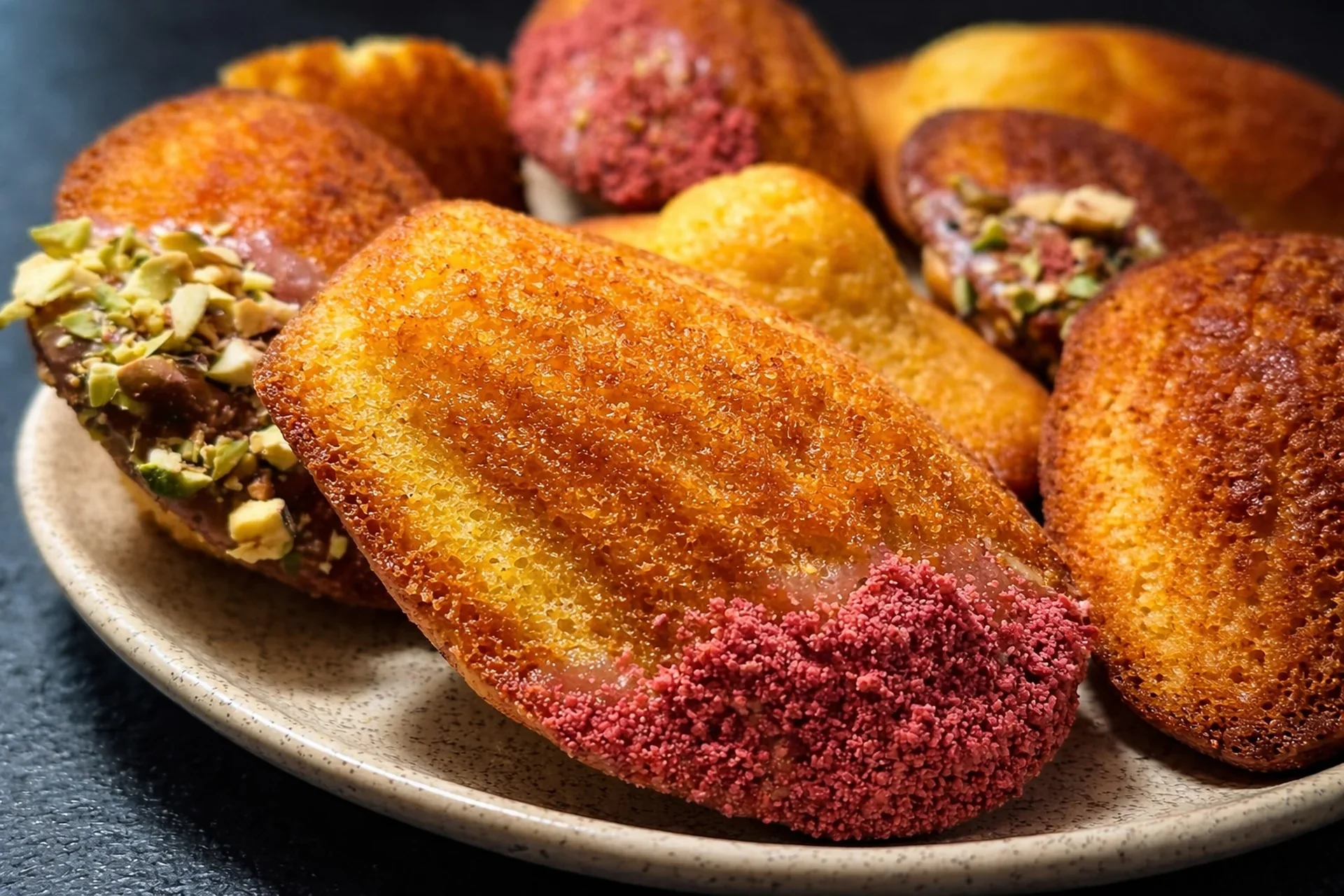
- Dip the tip of each madeleine into the glaze, then decorate with fruit powder or chopped pistachios.
- Traditionally, however, madeleines are served plain, without glaze.
Why These Madeleines Work So Well
Madeleines are one of the most beloved small bakes in French pastry, and it is easy to understand why. Their charm comes from simplicity.
With just a few pantry ingredients, you get a delicate cake that feels elegant, nostalgic, and deeply comforting.
In this version, the ingredients are kept minimal, which allows the buttery flavor and soft texture to shine. That is one of the reasons the classic French-madeleine recipe remains such a treasured preparation even today.
The flour provides the structure, while the eggs bring lightness and richness at the same time. Sugar sweetens the batter but also helps create that lightly golden exterior during baking.
The milk softens the crumb and keeps the texture tender, while the melted butter is the real heart of the recipe. Butter gives madeleines their distinctive richness, their moist interior, and that unmistakable bakery-style aroma.
The baking powder helps them rise, but the refrigerated resting time is equally important. Chilling the batter before baking helps create the characteristic hump, which is one of the visual signatures of a successful batch of homemade French-madeleines.
Historically, madeleines are associated with northeastern France, especially the Lorraine region. Over time, they became one of the most recognizable symbols of French home baking.
They are often linked to tea time, elegant pastry trays, and the everyday pleasure of turning simple ingredients into something beautiful. Their cultural identity comes from refinement without excess.
They are not overloaded with fillings, frostings, or heavy decoration. Instead, they celebrate texture, aroma, and balance. That is what makes easy buttery madeleines from scratch such a timeless recipe for both beginner and experienced bakers.
What inspires me about this recipe is exactly that sense of restraint. In a world where desserts often become more elaborate and dramatic, there is something deeply satisfying about returning to a classic that does not need much to impress.
I wanted to keep the spirit of the original intact while making a version that is approachable and easy to recreate at home. I did not overload the batter with extra flavors, because part of the beauty of traditionally made French-style madeleine cookies lies in their purity.
Sometimes the best baking comes from respecting the original idea and allowing technique to do the work.
From a nutritional point of view, these madeleines are a small indulgence. They contain butter, sugar, and flour, so they are definitely a treat rather than an everyday health food. Still, because they are small and portion-friendly, they can fit beautifully into a balanced lifestyle. Eggs contribute a bit of protein, butter provides richness and satiety, and the simple ingredient list means you know exactly what is going into them. Compared with heavily processed pastries, a simple French tea cakes recipe like this can feel much more satisfying because of their homemade quality and honest ingredients.
Another detail worth appreciating is their versatility. Served plain, they are classic and elegant. With a light glaze, pistachios, or fruit powder, they become a little more playful and visually polished. That gives you room to adapt them depending on the occasion, while still staying close to the original spirit of the dish. In the end, these madeleines prove that French baking does not always need to be complicated to feel special.
Frequently Asked Questions
Below are a few helpful questions and answers in case you want to understand the recipe better before baking.
Q: Why does the batter need to rest in the fridge?
A: Chilling the batter helps develop the texture and encourages the classic madeleine hump during baking. It also allows the flour to hydrate properly, which improves the final crumb.
Q: Can I skip the glaze?
A: Yes, absolutely. In fact, classic madeleines are usually served plain. The glaze is only optional if you want a decorative touch.
Q: How do I know when the madeleines are done?
A: They should be lightly golden on the edges and spring back slightly when touched. The baking time in this recipe is short, so keep an eye on them.
Q: Can I make madeleines without a madeleine pan?
A: You can bake the batter in small molds, but you will not get the traditional shell shape that defines authentic madeleines.
Q: How should I store them?
A: Madeleines are best enjoyed fresh, ideally on the day they are baked. You can keep them in an airtight container for 1 to 2 days, but they are at their best shortly after cooling.
Conclusion
I hope you will test this dish and enjoy just how simple, elegant, and delicious these classic French madeleines are. They are the kind of bake that proves a few basic ingredients can come together into something truly special. If you make them, tag us so we can see your version. The full video of the recipe is available on YouTube, so make sure to check it out, and do not forget to like and subscribe.
Nutrition Facts / Serving
- Calories: 108
- Total Fat: 5.8 g
- Cholesterol: 37 mg
- Sodium: 41 mg
- Potassium: 22 mg
- Total Carbohydrate: 12.5 g
- Sugars: 6.4 g
- Protein: 1.7 g