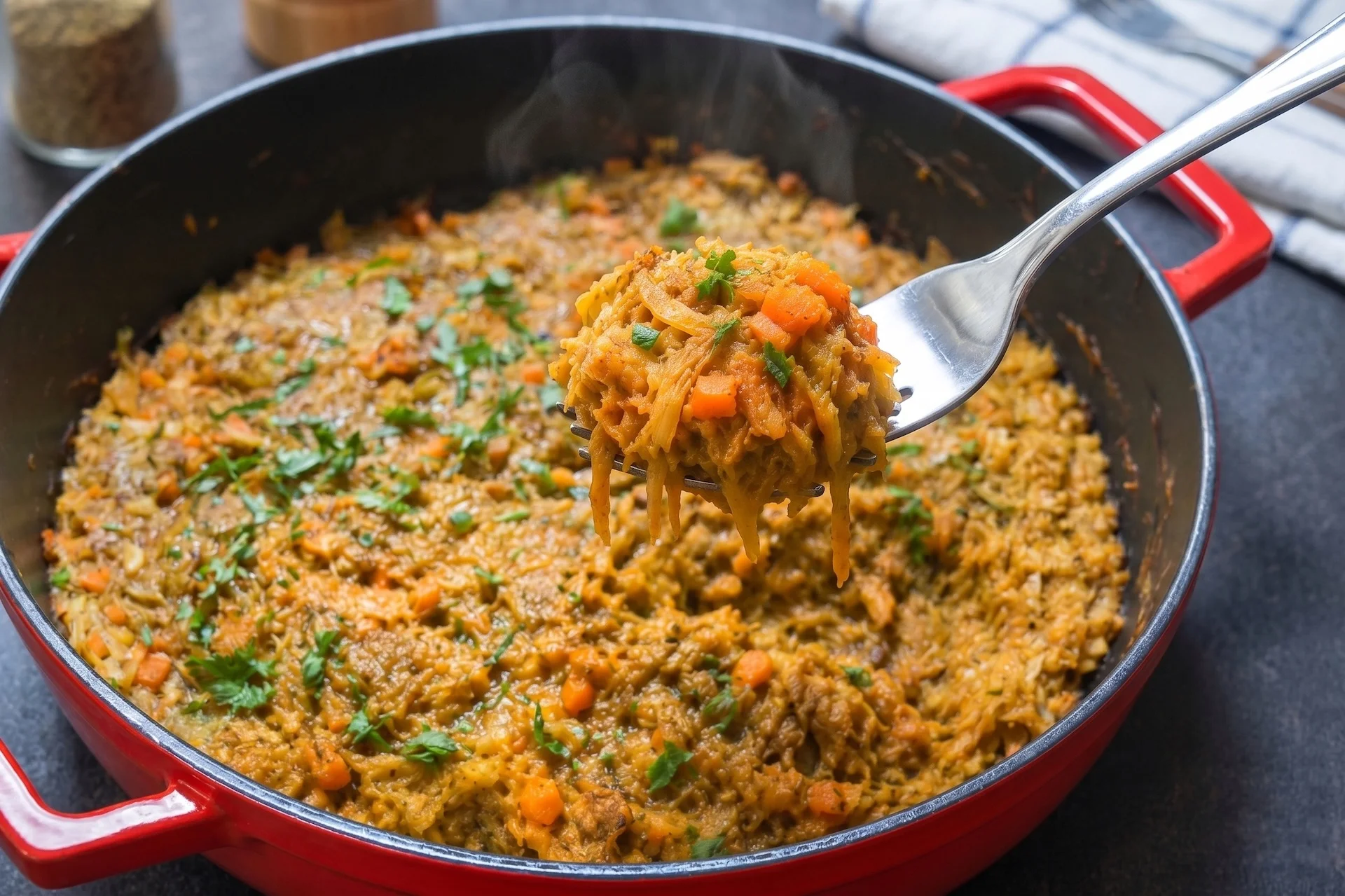
Romanian Sautéed Cabbage — Simple, Vegan, and Deeply Comforting
Romanian sautéed cabbage made vegan with tomato paste, dill, paprika, and caramelized edges. A cheap, comforting €1 dinner.
15 minutes
Prep time
50 minutes
Cook time
Ingredients
- 1 medium green cabbage, very thinly sliced
- 1 onion, finely chopped
- 1 carrot, diced small
- 2 tablespoons olive oil, divided
- 1–2 teaspoons tomato paste
- 1 cup water, plus 2–3 tablespoons more for deglazing
- 1 teaspoon sweet paprika
- 1 tablespoon dried dill
- 1 teaspoon granulated garlic
- Salt, to taste
- Black pepper, to taste
- Fresh parsley, for serving
Equipment
- Large cast-iron skillet, Dutch oven, or oven-safe pan
- Sharp knife
- Cutting board
- Mandoline, optional but recommended
- Wooden spoon or spatula
- Measuring spoons
- Oven
Instructions
Today I want to talk to you about a simple Romanian recipe that is vegan, inexpensive, and absolutely delicious: Romanian sautéed cabbage. This is one of those dishes that proves good food does not need many ingredients or complicated techniques. It is humble, affordable, and incredibly satisfying.
Every Romanian household has its own version of this dish. Some make it sweeter, some more peppery, some softer, some more caramelized. So today I’m sharing the way we make it in our family, inspired by my grandmother’s version, but updated just a little to feel more modern, deeper in flavor, and more intentional.
This vegan Romanian cabbage recipe works beautifully as a side dish, but it is also hearty enough to be eaten on its own with fresh parsley, good bread, or even a spoonful of polenta.
How to Make Romanian Sautéed Cabbage
- Start by heating 1 tablespoon of olive oil in a large pan or Dutch oven. Add the finely chopped onion and diced carrot, then sauté for 2–3 minutes, just until they begin to soften.
- Add the tomato paste and stir well. Cook everything together for another 3–4 minutes, allowing the tomato paste to darken slightly and become sweeter and more concentrated. Remove the onion and carrot mixture from the pan and set it aside.
- Add the remaining tablespoon of olive oil to the same pan. Take the cabbage and slice it as thinly as possible.
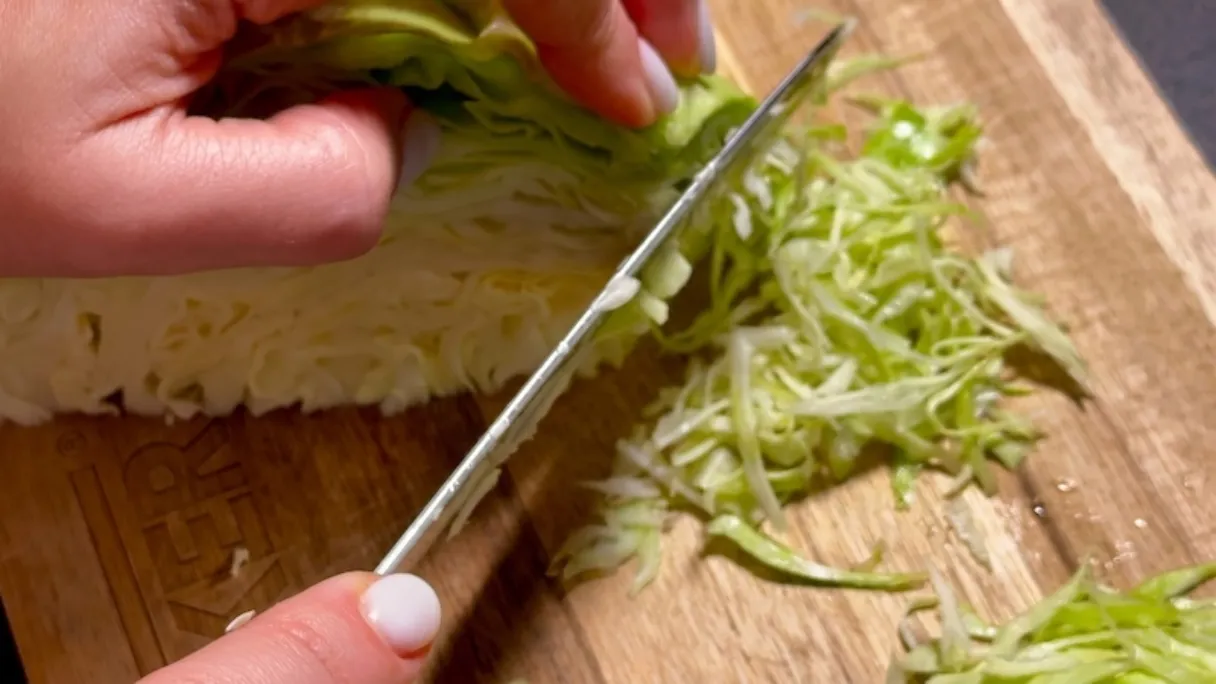
- If you cannot slice it very finely with a knife, I really recommend using a mandoline. Thin cabbage cooks better, browns more evenly, and gives this dish a much better texture.
- Add the cabbage to the pan with a good pinch of salt. Cook it over medium heat until it begins to soften and lightly brown. The salt will help draw out moisture, while the heat will start developing that sweet, caramelized cabbage flavor.
- Once the cabbage has browned slightly, pour in 1 cup of water and deglaze the pan, scraping up all the flavorful bits from the bottom.
- Add the cooked onion and carrot mixture back in, then season with black pepper, sweet paprika, dried dill, and granulated garlic. Stir everything well.
- Cover the pan with a lid and cook over low heat for about 30 minutes, until the cabbage is tender and deeply flavored.
- After 30 minutes, remove the lid and let the cabbage cook for another 10 minutes, so some of the moisture evaporates and the cabbage starts to brown again.
- Deglaze once more with 2–3 tablespoons of water, then transfer the pan to the oven at 220°C / 425°F for about 10 minutes, just until the top gets slightly roasted and caramelized.
- Serve with plenty of fresh parsley on top.
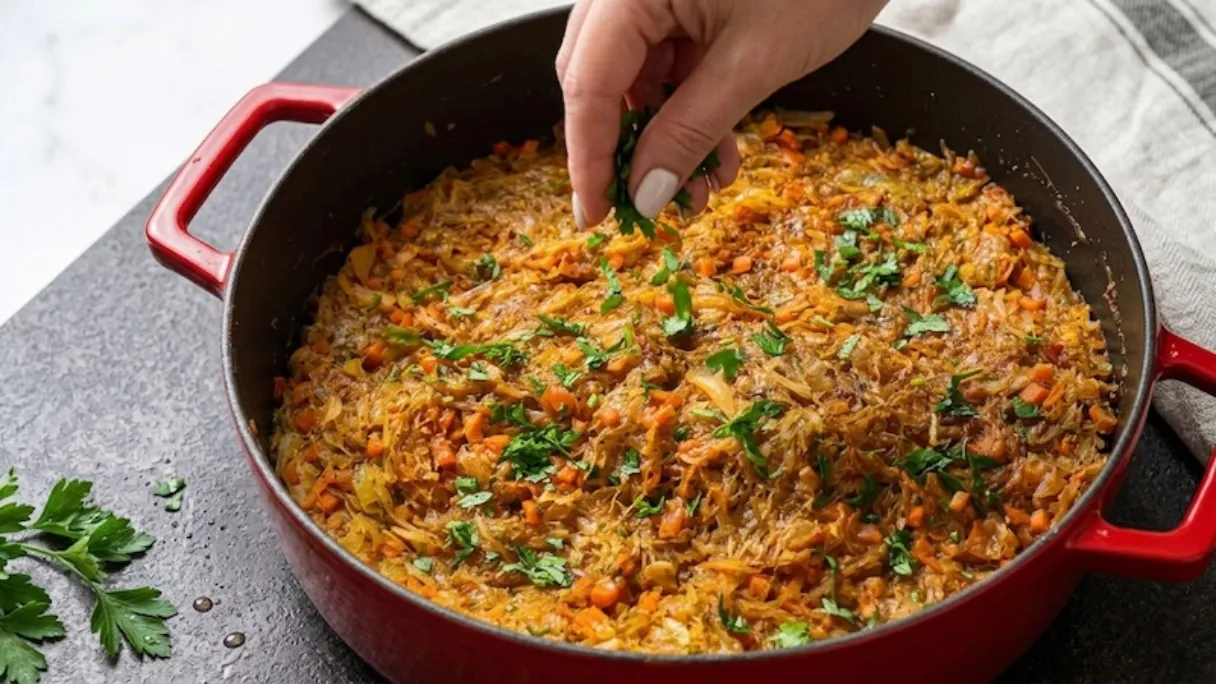
- This Romanian braised cabbage with dill can be served as a side dish or enjoyed as a simple vegan meal on its own.
Why This Recipe Works So Well
Building Flavor from Simplicity
What makes this traditional Romanian cabbage dish so special is the way very basic ingredients build flavor slowly. Cabbage is naturally sweet, but it needs time, salt, and heat to show its best side. When sliced very thinly, it softens quickly, browns more evenly, and becomes almost silky without turning watery or heavy.
The Magic of the Onion-Carrot Base
The onion and carrot form a classic Romanian flavor base. They add sweetness, depth, and body. Cooking them first with tomato paste is a small update to the traditional method, but it makes a real difference. Tomato paste can taste flat if it is simply stirred into liquid, but when it is cooked in oil for a few minutes, it becomes sweeter, richer, and more rounded. This gives the dish a deeper flavor without needing meat, stock, or expensive ingredients.
Essential Seasonings: Paprika, Dill, and Garlic
The paprika brings warmth and color, while the dried dill is essential. Dill and cabbage are a very natural combination in Romanian cooking. Dill adds a slightly grassy, aromatic note that cuts through the sweetness of the cabbage and gives the whole dish a familiar, traditional taste. Granulated garlic is not always part of older versions, but I like using it here because it adds a gentle savory background without overpowering the cabbage.
Tradition Meets Modern Touches
This recipe is inspired by my grandmother’s version of călită cabbage, the kind of food that appears in many Romanian homes because it is practical, cheap, and deeply comforting. The original dish is often cooked entirely on the stovetop, sometimes with more oil, sometimes with smoked meat, and sometimes served next to polenta or sausages. My version keeps the soul of the dish but makes it fully plant-based and a little lighter.
The Oven Finish: Caramelization and Texture
The oven finish is my modern update. After the cabbage has become soft and flavorful, the final 10 minutes at high heat give it a roasted edge. That little bit of caramelization makes the dish feel less flat and adds texture. It turns a simple cheap vegan cabbage recipe into something that feels much more complete.
Light, Nutritious, and Versatile
Nutritionally, this is a light but satisfying dish. Cabbage is low in calories and high in fiber, which makes it filling without being heavy. It also provides vitamin C, vitamin K, and antioxidants. Carrot adds natural sweetness and beta-carotene, while onion contributes depth and prebiotic fibers. Because this is a healthy vegan cabbage side dish, it works well with grains, legumes, potatoes, polenta, or simply a slice of good bread.
This is exactly the kind of recipe that represents smart home cooking: affordable ingredients, careful technique, and a result that tastes much bigger than the shopping list.
FAQ
Here are a few common questions that can help you adapt this recipe and make the best version at home.
Q: Can I make this Romanian sautéed cabbage ahead of time?
A: Yes. This dish is actually very good the next day because the flavors have more time to settle. Store it in an airtight container in the fridge and reheat it gently in a pan or in the oven.
Q: Can I make this recipe without oil?
A: You can reduce the oil, but I would not remove it completely. A small amount of olive oil helps brown the vegetables and carry the flavor of the tomato paste, paprika, and dill.
Q: What should I serve with this vegan cabbage recipe?
A: This easy vegan Romanian cabbage recipe works well with polenta, bread, roasted potatoes, beans, or rice. It can also be served as a side dish next to a heartier main.
Q: Can I use fresh dill instead of dried dill?
Yes. If using fresh dill, add it closer to the end of cooking so it keeps its aroma. Dried dill works very well here because it can cook slowly with the cabbage and infuse the whole dish.
Q: Why do you finish the cabbage in the oven?
A: The oven helps caramelize the top layer and gives the cabbage a deeper roasted flavor. It is not strictly traditional, but it makes this modern Romanian cabbage recipe more textured and flavorful.
Conclusion
I hope you will test this dish, especially if you love simple recipes that are inexpensive, comforting, and full of flavor. This is one of those humble Romanian dishes that deserves more attention because it shows how good basic ingredients can become when treated properly.
If you make it, tag us along when you do. I would love to see your version.
The full video of the recipe is available on YouTube, so check it out, and don’t forget to like and subscribe.
Nutrition Facts / Serving
- Calories: 160 kcal
- Total Fat: 7.5 g
- Cholesterol: 0 mg
- Sodium: 610 mg
- Potassium: 650 mg
- Total Carbohydrate: 22 g
- Sugars: 11 g
- Protein: 4 g