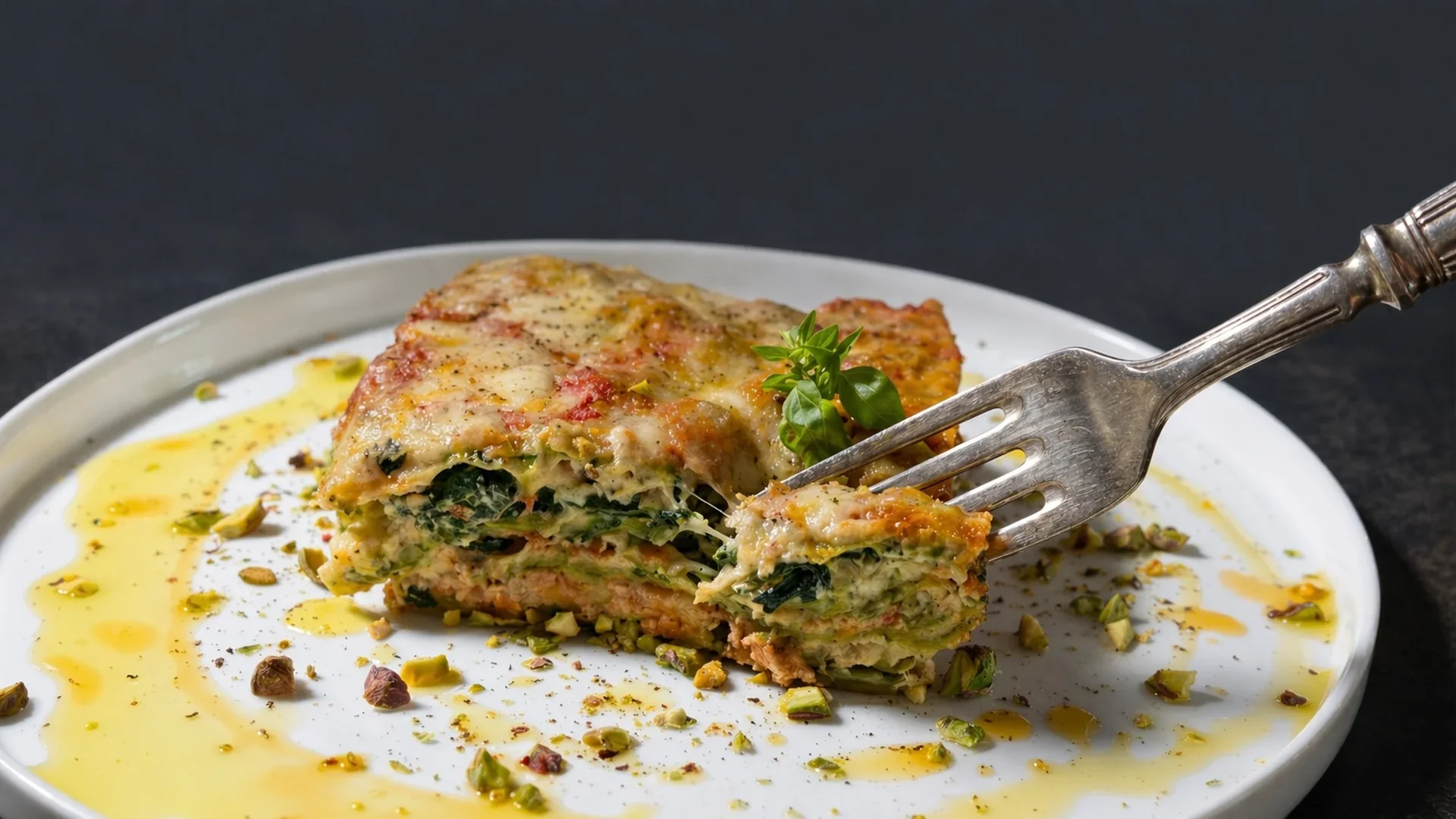
Fresh Spring Lasagna
Spring lasagna with wild garlic pasta, ricotta, and vegetables. A lighter, greener take on lasagna that still feels rich and comforting.
75 minutes
Prep time
60 minutes
Cook time
Ingredients
For the wild garlic pasta dough
- 2 cups wild garlic leaves
- 300–400 g all-purpose flour
- 50 g semolina
- 2 tbsp olive oil
- 3 eggs
For the sauce
- 500 ml crushed tomatoes
- 1 tbsp sugar
- 1 tbsp olive oil
- Peperoncino, to taste
For the filling
- 10 cm leek, thinly sliced
- 1 zucchini, diced
- 1 red bell pepper, diced
- 100 g baby spinach
- 150 ml half-and-half
- 500 g ricotta
- 100 g grated mozzarella
- 2 eggs
- Salt and pepper, to taste
For the topping
- 100 g grated mozzarella
- 20 g grated Parmesan
Equipment
- Pasta machine
- Large mixing bowl
- Blender
- 24cm square ceramic baking dish (or a rectangular one)
- Aluminum foil
- Muslin cloth or tea towel
Instructions
If classic lasagna has one weakness, it is this: too often, it mistakes heaviness for comfort.
A good lasagna should feel rich, layered, and deeply satisfying. But many versions lean so hard into meat, béchamel, and density that the result becomes exhausting rather than generous. That logic makes sense in winter. It makes much less sense in spring.
This is the version I actually want to eat when the weather shifts.
It keeps everything lasagna gets right — structure, comfort, creaminess, the pleasure of cutting through proper layers — but rebuilds the dish around seasonal energy instead of cold-weather weight. The pasta is made with wild garlic, which gives it a greener, fresher identity from the start. The filling swaps heaviness for ricotta, mozzarella, leek, spinach, zucchini, and bell pepper. The sauce stays tomato-based, but lighter and cleaner, there to sharpen the dish rather than bury it.
This is not lasagna trying to be delicate. It is lasagna rebuilt with better judgment for spring.
If you love homemade comfort food but want it to feel brighter, more vegetable-forward, and more alive, this wild garlic lasagna is absolutely worth making.
Why this version deserves to exist
Because classic lasagna already solved one problem brilliantly: comfort.
What it did not always solve is seasonality.
This version exists because spring deserves a lasagna that still feels generous, but not heavy for the sake of tradition. It exists because wild garlic is too good an ingredient to waste on predictable applications. And it exists because lasagna is one of those rare classic formats that can take a rebuild without losing its soul.
The point here is not novelty. The point is better fit.
Same emotional payoff. Better seasonal logic.
How to make it
Make the wild garlic pasta
Start with the wild garlic leaves. Remove the stalks, blanch the leaves in boiling salted water for 10 seconds, then transfer them immediately to iced water. This keeps the color vivid and prevents the flavor from turning dull.
Once cooled, squeeze out as much water as possible and blend the leaves into a smooth puree. Then squeeze that puree again through a muslin cloth or clean tea towel. This step matters more than it seems. If the puree is too wet, the dough becomes harder to control and the pasta loses some of its structure.
Add the wild garlic puree to a food processor with the olive oil and pulse briefly. Add about 200 g of the flour, the semolina, and the egg yolks, then pulse again until the dough starts to come together.
Transfer it to a work surface and knead, adding more flour as needed, until you get a smooth, soft dough. Wrap it and let it rest in the fridge for at least 30 minutes.
Roll the dough through a pasta machine to your preferred thickness, then cut it into rectangles that fit your baking dish. Dust lightly with semolina and leave the sheets on parchment while you prepare the filling.
This is one of the elements that makes the dish feel special. The green pasta is not just decorative. It tells you, before the first bite, that this is not standard lasagna.
Build the filling
Slice the leek thinly and cook it in olive oil for 2 to 3 minutes until softened. Add the zucchini and red bell pepper and cook for another 2 to 3 minutes. You are not trying to fully cook the vegetables here. You are building flavor and removing some rawness while keeping enough structure for the final bake.
Add the baby spinach, season with salt and pepper, and cook just until wilted. Pour in the half-and-half, stir, and remove from the heat. Let everything cool slightly.
In a blender or food processor, combine the ricotta, grated mozzarella, eggs, salt, and pepper until smooth and creamy. Fold the cooled vegetables into that mixture.
This filling works because it gives you richness without the blunt force of a heavier lasagna. Ricotta keeps it creamy, mozzarella gives it body, and the vegetables stop the whole thing from collapsing into softness.
Make the sauce
Combine the crushed tomatoes, sugar, olive oil, and peperoncino in a pan and simmer until slightly thickened.
This sauce should stay relatively simple. Its job is not to dominate. Its job is to cut through the dairy, bring acidity, and keep the lasagna from becoming too mellow. In a dish like this, restraint is part of the design.
Assemble the lasagna
Spread a thin layer of tomato sauce on the bottom of your baking dish.
Add a layer of pasta sheets, then a layer of the ricotta and vegetable filling, then more tomato sauce. Repeat the layers 2 to 3 times, depending on the size of your dish and how much pasta you have.
Finish with a final layer of tomato sauce, then top with the grated mozzarella and Parmesan.
Cover with foil and bake at 190°C for 40 to 45 minutes. Remove the foil and bake for another 15 minutes, until the top is golden and bubbling.
Let the lasagna rest for at least 10 minutes before slicing. That rest is not optional if you want clean layers rather than collapse.
Why this lasagna works
It keeps the soul of lasagna, but changes the weight distribution
That is really the whole point.
Classic lasagna is one of the great comfort-food formats because it is built on repetition, contrast, and layering. Pasta, filling, sauce, cheese. Again and again, until it becomes more than the sum of its parts.
What often goes wrong is not the format, but the calibration.
Too much béchamel, too much meat, too much density, too little contrast — and the dish starts feeling heavy in a lazy way rather than rich in an intentional one.
This version solves that differently.
The ricotta gives you softness without making the dish gluey. The vegetables bring texture and freshness. The tomato sauce adds acidity. And the wild garlic pasta shifts the whole dish upward, away from winter heaviness and toward something greener, sharper, and more seasonal.
In other words: this is not lighter because it is missing something. It is lighter because the balance is better.
Wild garlic gives the dish a point of view
Wild garlic is not just there because it is seasonal and pretty.
It matters because it changes the identity of the lasagna without disrupting its structure. It has a softer, greener, more herbaceous flavor than standard garlic, so it makes sense in pasta where you want aroma and freshness without aggression.
That is what gives this lasagna its own logic. Without the green pasta, it would still be good. With it, the dish becomes specific.
And specific food is usually more memorable food.
It respects the original without preserving it blindly
Lasagna has deep roots in Italian cooking, especially in regional forms that rely on fresh pasta, layered fillings, and baked structure. That history matters. But respecting a dish does not mean freezing it in one form forever.
This is exactly where FoodNerd.Kitchen lives: understanding what deserves to stay, then rebuilding what no longer makes sense for the result you want.
The soul of lasagna is still here:
- layered pasta
- creamy filling
- sauce
- melted top
- deep comfort
What changed is the seasonal logic.
That is the difference between blind tradition and intelligent rebuilding.
Easy substitutions
Don’t want to make homemade pasta?
Use store-bought lasagna sheets. The dish still works. The homemade wild garlic pasta makes it more distinctive, but the core structure is strong enough to survive the shortcut.
No wild garlic?
Use spinach with 1 or 2 stalks of green garlic, or add a small amount of garlic to the filling. It will not be identical, but it will still preserve the fresh spring direction.
Want to push the spring angle further?
Peas, asparagus tips, or extra greens would all fit naturally here, as long as you do not overload the filling with water.
Frequently asked questions
Q: Can I make this spring lasagna ahead of time?
A: Yes. You can assemble it fully, cover it, and refrigerate it before baking. It is a good make-ahead dish for weekends or entertaining.
Q: Can I freeze this wild garlic lasagna?
A: Yes. You can freeze it either before or after baking. Wrap it tightly, then thaw in the fridge before reheating or baking.
Q: What can I use instead of wild garlic?
A: Spinach plus green garlic is the closest substitute. A few garlic cloves can also work, especially in the filling, though the result will be less delicate.
Q: Is this a good vegetarian lasagna for spring?
A: Yes, because it keeps the comfort of lasagna while using vegetables, ricotta, and a fresher structure that fits the season better.
Q: How long should lasagna rest before serving?
A: At least 10 minutes. That gives the layers time to settle and makes slicing much cleaner.
Conclusion
This spring lasagna earns its place because it does not just decorate a classic with green ingredients. It actually rebuilds the dish around a better seasonal idea.
You still get everything people love about lasagna: the layers, the creaminess, the golden top, the deep comfort. But you also get contrast, freshness, and a structure that makes more sense for spring.
That is the kind of rebuild I care about most. No change for attention. Change that improves the fit, the balance, and the experience of eating the dish.
The full video is available on YouTube. If you make it, tag us — I would genuinely love to see your version.
Nutrition Facts / Serving
- Calories: ~713
- Total Fat: ~32.3 g
- Cholesterol: ~235 mg
- Sodium: ~413 mg
- Potassium: ~784 mg
- Total Carbohydrate: ~69.3 g
- Sugars: ~10.6 g
- Protein: ~33.2 g