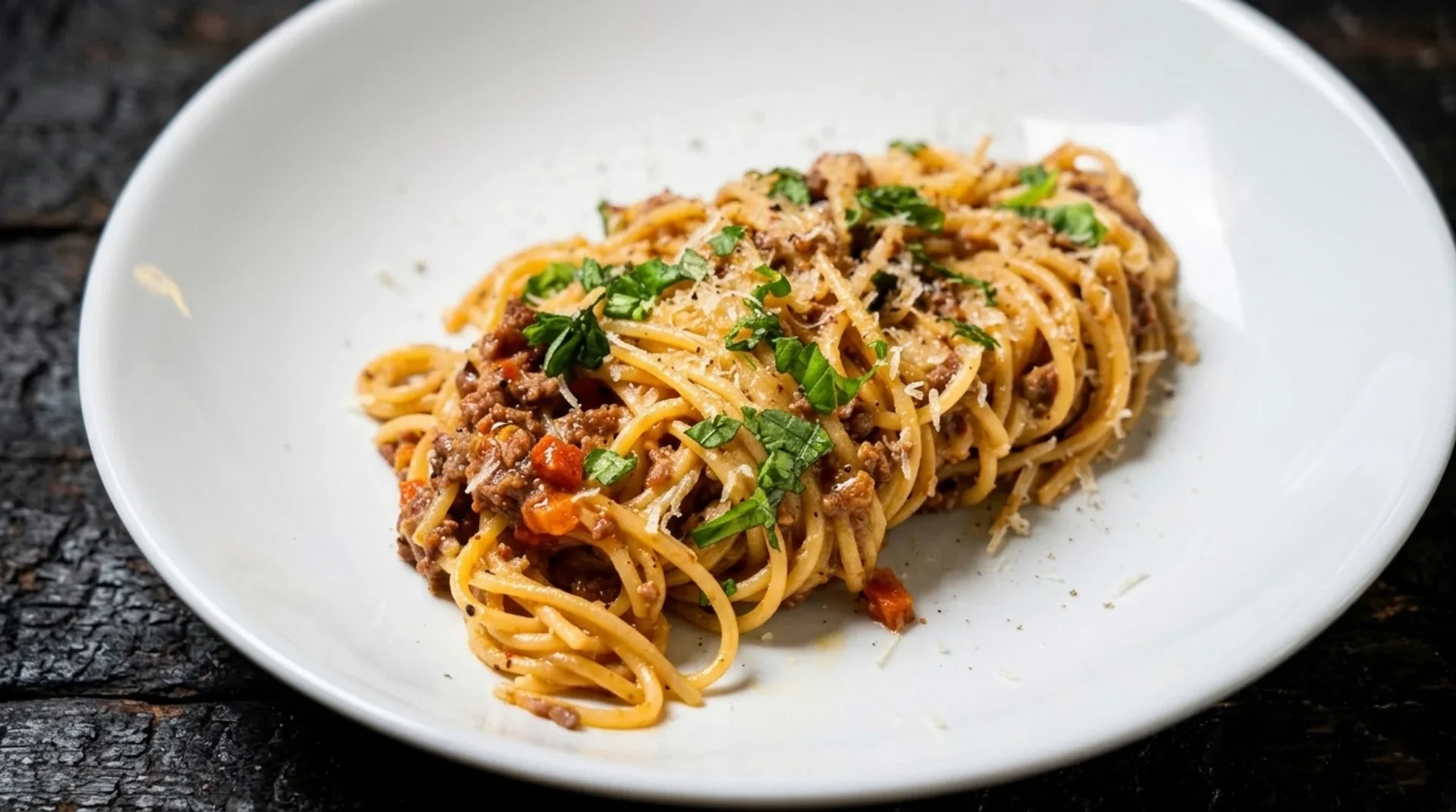
Getting Drunk on Bolognese Pasta
Slow-cooked creamy Bolognese Pasta
15 min
Prep time
3 hours
Cook time
Ingredients
Pasta
- 500g spaghetti
- 50g parmesan
Ragu
- 500 g beef chuck
- 1 medium carrot
- 1 celery stalk
- 1 medium onion
- 2 garlic cloves
- 2 tbsp olive oil
- 1 tbsp paprika
- 1 cup beef stock
- 1 cup whole milk
- 2 tbsp tomato paste
- 125 ml Dry Vermut
- 125 ml Marsala wine
- 1 tsp salt
- 1 tsp ground black pepper
For serving
- Parmesan cheese
- Black pepper
- Fresh basil
Equipment
- Cast iron pot
- Regular pot
- Frying pan
- Grater
- Pasta machine
- Mixing bowl
Instructions
Some recipes arrive in our lives later, while others quietly shape our entire understanding of food from childhood. For me, Bolognese pasta belongs firmly in the second category.
The very first pasta dish I ever tasted was an attempt at spaghetti with Bolognese sauce, and for many years, I genuinely believed that this was the only pasta recipe that existed. In my childhood imagination, pasta simply meant spaghetti and a rich meat sauce.
As I grew older and began exploring cooking seriously, I realized how vast and diverse the world of pasta actually is.
Yet that early memory stayed with me. Over time, I felt the need to revisit that dish and create my own version — a deeply flavorful homemade Bolognese ragù that reflects both tradition and personal taste.
This recipe is not meant to be a strict reproduction of the classic Ragù alla Bolognese from Bologna. Instead, it is a personal interpretation inspired by Italian technique, family cooking habits, and a few ingredients that bring extra depth and warmth.
The result is a comforting bowl of spaghetti with rich beef ragù, slowly simmered until the flavors become silky, savory, and deeply satisfying.
How to Make Homemade Bolognese Pasta
Start the Ragù Base
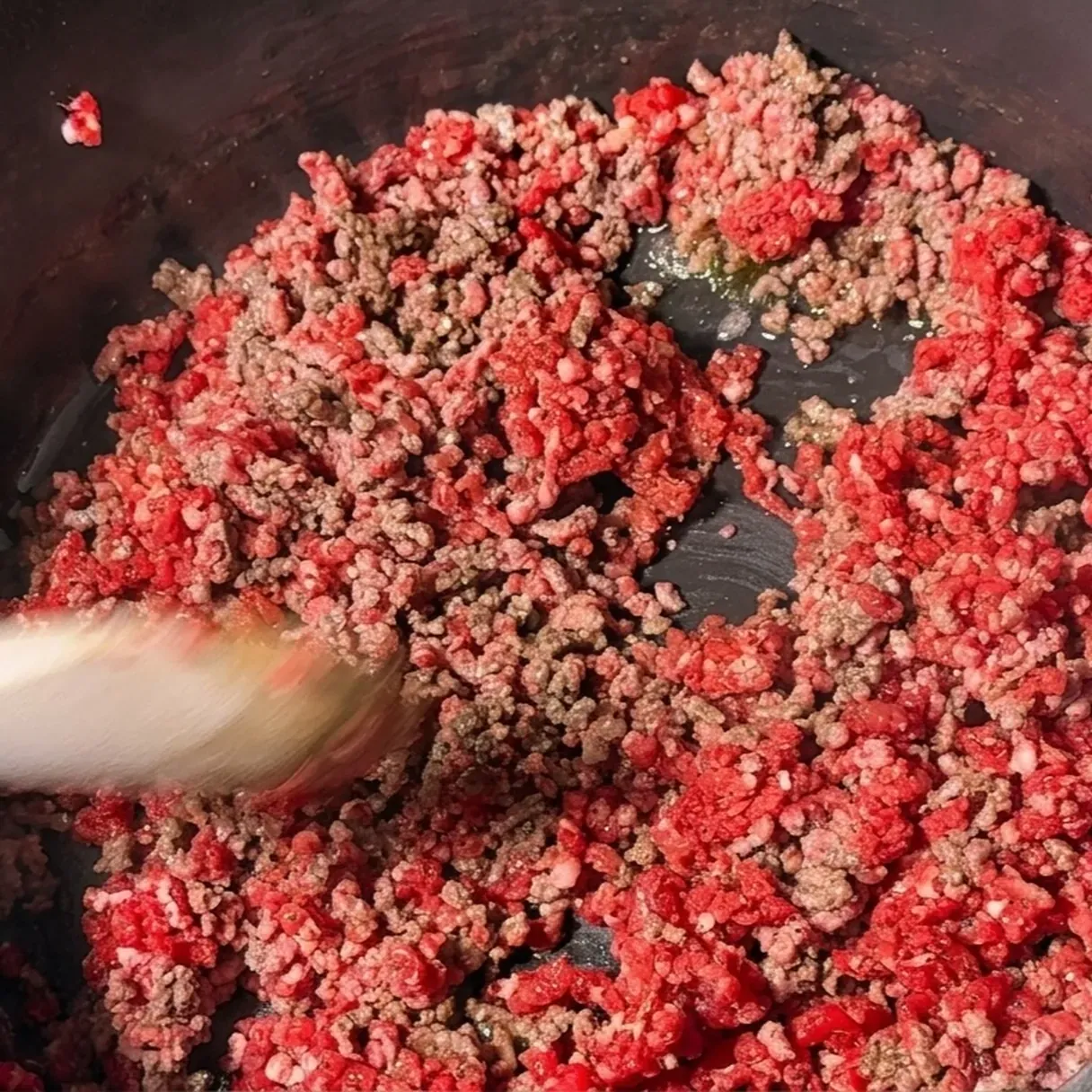
- Place a cast-iron pot on medium heat and add 1 tablespoon olive oil.
- After about 30 seconds, add the minced beef.
- Allow it to brown gently for a few minutes, turning occasionally so the meat develops flavor and a slightly caramelized surface
Build the Flavor Foundation
- Add the diced onion, celery, carrot, and garlic directly over the beef.
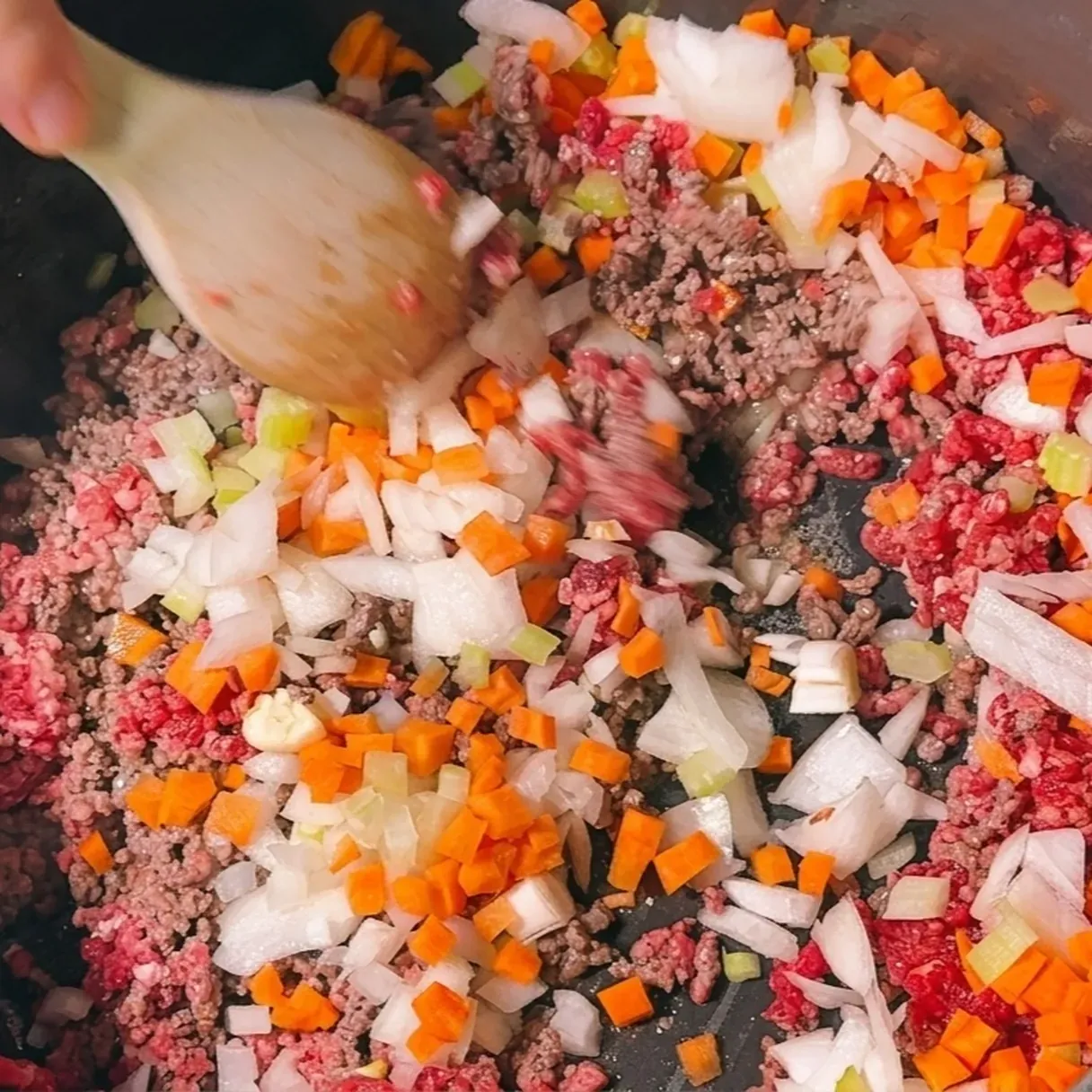
- Stir and cook for about 2–3 minutes, allowing the vegetables to soften slightly.
- Add the tomato paste and mix well, coating the meat and vegetables.
Deglaze with Wine
- Pour in the Marsala wine and dry vermouth.
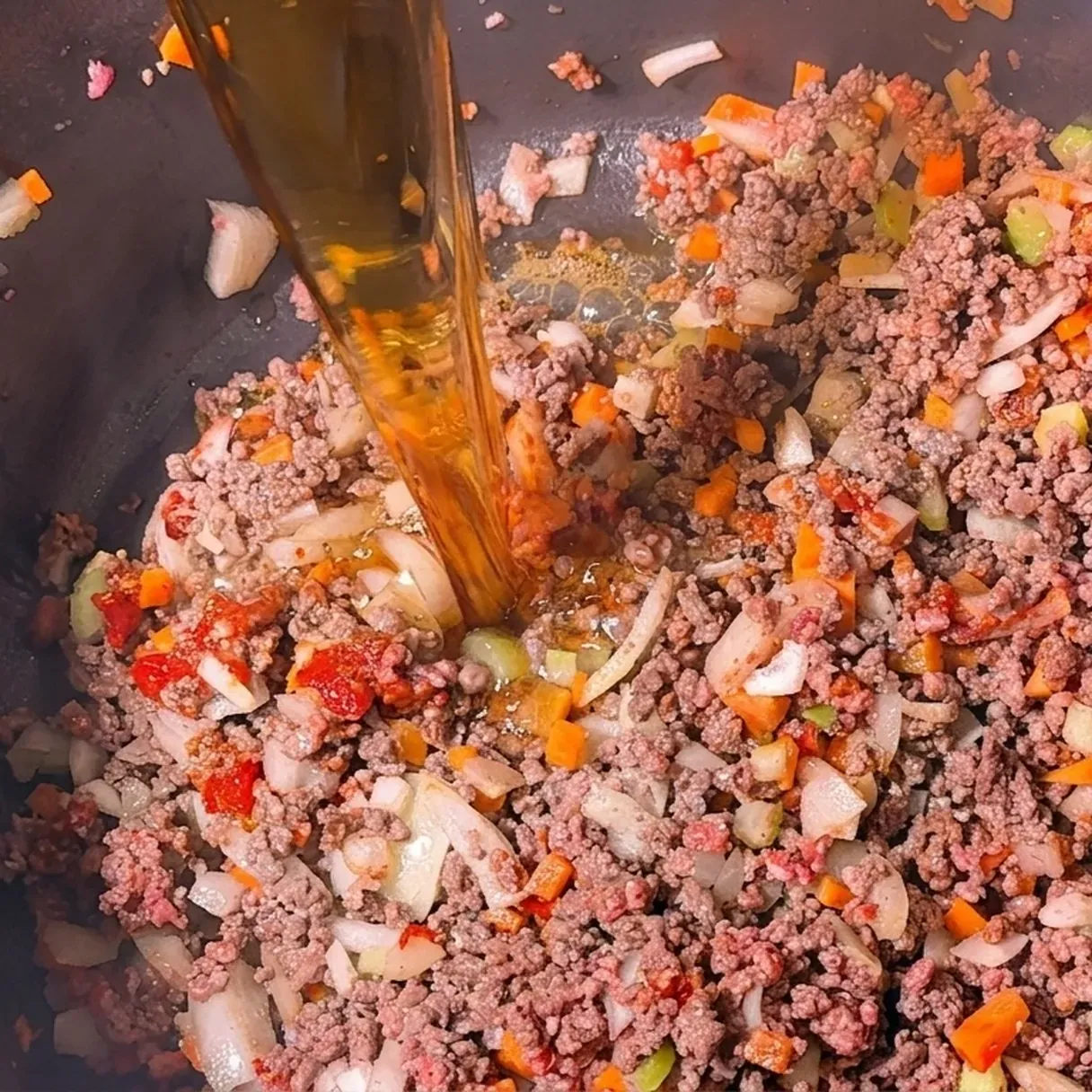
- Stir thoroughly, then simmer gently on low heat for 10–15 minutes, allowing the alcohol to cook off and the flavors to concentrate.
Slow Simmer
- Add the milk, beef stock, paprika, salt, and black pepper.
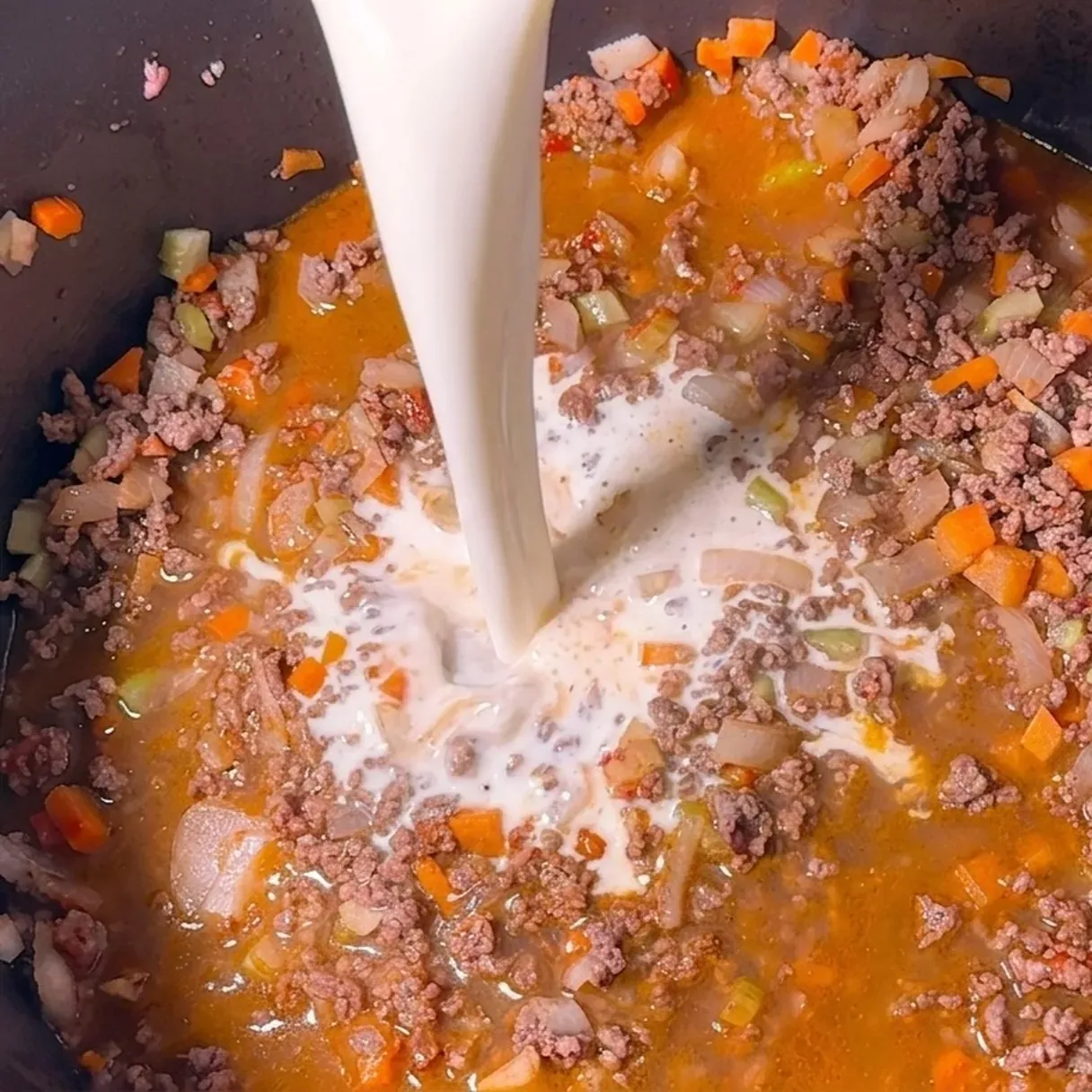
- Stir everything together and reduce the heat to low.
- Let the sauce simmer gently for about 2 hours. If the sauce becomes too thick during cooking, add small amounts of additional stock.
Finish the Sauce
- After two hours, stir in the cream.
- The sauce should now be rich, creamy, and deeply flavorful.
Cook the Pasta
- Cook the spaghetti in salted water according to the package instructions.
- Once cooked, transfer the pasta directly into the ragù pot.
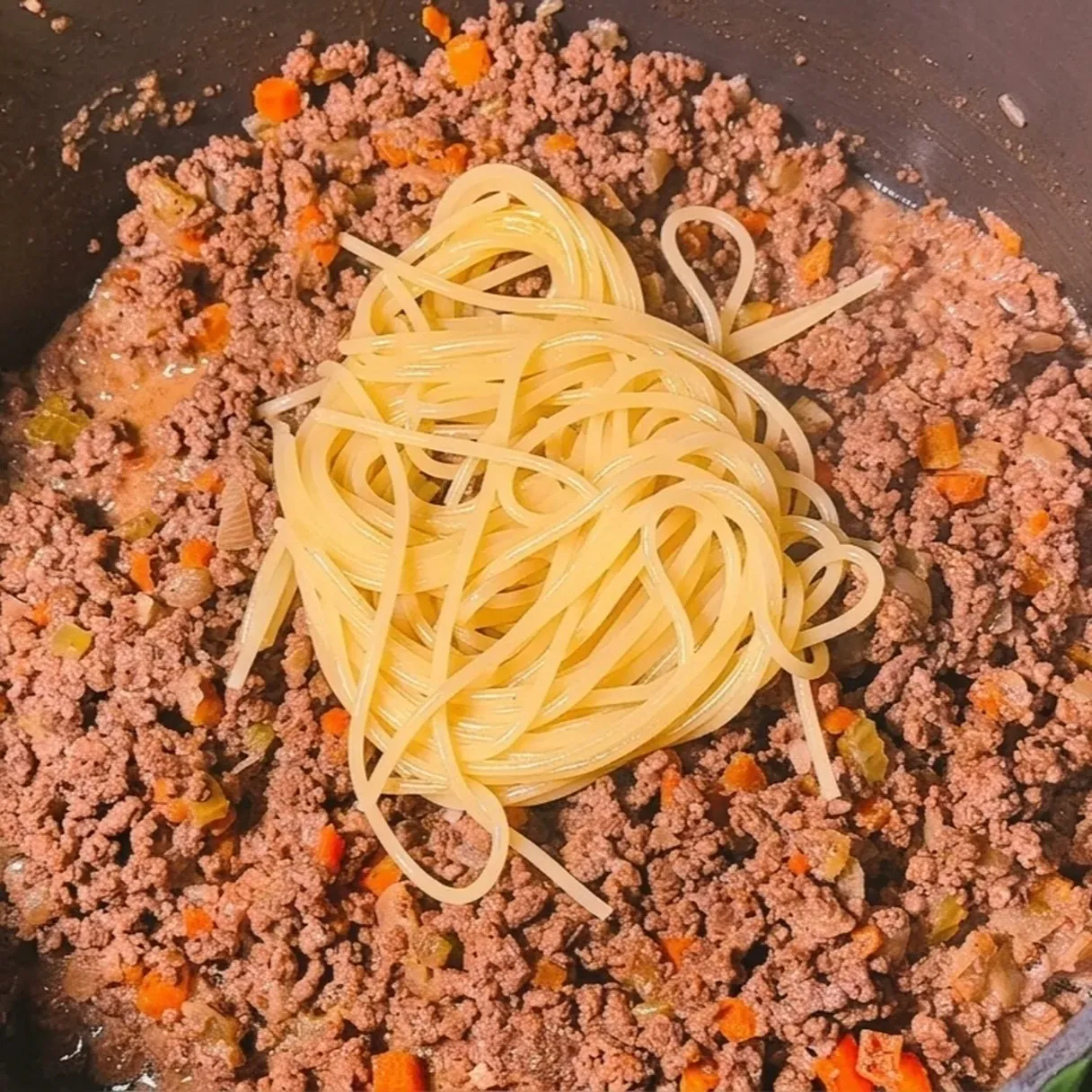
- Toss to coat the noodles in the sauce along with the parmesan cheese.
Serve
Plate the pasta and finish with:
- freshly grated parmesan cheese
- freshly cracked black pepper
- chopped fresh basil
Serve immediately while the pasta is hot and glossy.
The Story Behind This Bolognese Ragù Recipe
How I Ended Up Making My Own Version
Like many home cooks, my relationship with Bolognese sauce began with something far simpler than the authentic Italian version. Growing up, the dish was usually made quickly — ground meat, tomatoes, pasta, and dinner was ready.
But the more I learned about cooking, the more I discovered the beauty of slow-cooked ragù. True depth of flavor comes from patience, layering ingredients, and allowing the sauce to slowly transform over time. So, long story short, this recipe grew out of that curiosity.
The combination of Marsala wine and vermouth is something I eventually adopted after experimenting with different wines. Each alcohol adds a slightly different aromatic profile.
Marsala brings warmth and sweetness, while vermouth contributes herbal notes that elevate the sauce.
The addition of milk and cream may surprise some people, but it is actually inspired by traditional Italian ragù techniques, where dairy softens the acidity of tomatoes and creates a silkier texture.
Over time, this version became our household favorite.
The Origins of Ragù alla Bolognese
The name Bolognese comes from the Italian city of Bologna, located in the Emilia-Romagna region. The classic Ragù alla Bolognese is a slow-cooked meat sauce traditionally served with tagliatelle rather than spaghetti.
The earliest documented reference to a precursor of this sauce dates back to the 18th century, when chef Alberto Alvisi, who cooked for Pope Pius VII, described a meat-based sauce served with pasta.
Over centuries, the recipe evolved and became one of the most recognized Italian dishes worldwide. However, the version most people know outside Italy is often quite different from the traditional one.
In Bologna itself, the Italian Academy of Cuisine even registered an official version of the recipe in 1982.
How This Version Differs from the Classic
Traditional ragù alla Bolognese usually contains:
- beef and sometimes pork
- soffritto (onion, carrot, celery)
- tomato paste
- wine
- milk
- long slow cooking
My version respects those ideas but introduces a few variations:
- Marsala and vermouth instead of standard wine
- a small amount of cream at the end
- paprika for extra warmth and color
These additions don't try to replace tradition but rather adapt the dish to the flavors we enjoy at home.
Nutritional Perspective
A well-balanced homemade Bolognese pasta can actually be quite nutritious when prepared thoughtfully.
Beef provides high-quality protein, iron, zinc, and vitamin B12. These nutrients support muscle health, oxygen transport in the body, and neurological function.
The carrot, celery, and onion base contribute fiber, antioxidants, and micronutrients that enhance both flavor and nutritional value.
Milk and cream add calcium and richness, though they also increase calories, which is why moderation is key.
When paired with pasta, the dish offers a balance of protein, carbohydrates, and fats, making it a satisfying and complete meal.
Using good-quality ingredients and allowing the sauce to cook slowly also improves digestibility and flavor complexity.
FAQ About Bolognese Pasta
Before diving into these questions, here are some common things people wonder about when making homemade Bolognese sauce.
Q: Can I use another type of wine instead of Marsala and vermouth?
A: Yes. You can substitute the alcohol mixture with red wine or white wine. The flavor will be slightly different but still delicious.
Q: Can I freeze Bolognese sauce?
A: Absolutely. Bolognese ragù freezes extremely well. Store it in airtight containers and freeze for up to 3 months.
Q: Should Bolognese be served with spaghetti?
A: Traditionally, ragù alla Bolognese is served with tagliatelle, but spaghetti works perfectly for home cooking and is widely used.
Q: How long should Bolognese sauce simmer?
A: The longer it cooks, the deeper the flavor becomes. Ideally, 1.5 to 3 hours on very low heat.
Q: Can this recipe be made lighter?
A: Yes. You can use lean ground beef, reduce the cream, or increase the amount of vegetables.
Conclusion
This homemade Bolognese pasta recipe is a dish that carries both memory and experimentation. It began with a childhood misunderstanding about what pasta could be, and it eventually became one of the most comforting recipes in our kitchen.
I truly hope you will give this rich beef ragù spaghetti a try. If you make it, don't forget to tag us so we can see your version.
Also, the full video of this recipe is available on YouTube, so make sure to check it out — and while you're there, don't forget to like the video and subscribe for more recipes.
Nutrition Facts / Serving
- Calories 852
- Total Fat 59 g
- Cholesterol 339 mg
- Sodium 1353 mg
- Potassium 384 mg
- Total Carbohydrate 63 g
- Sugars 7 g
- Protein 44 g