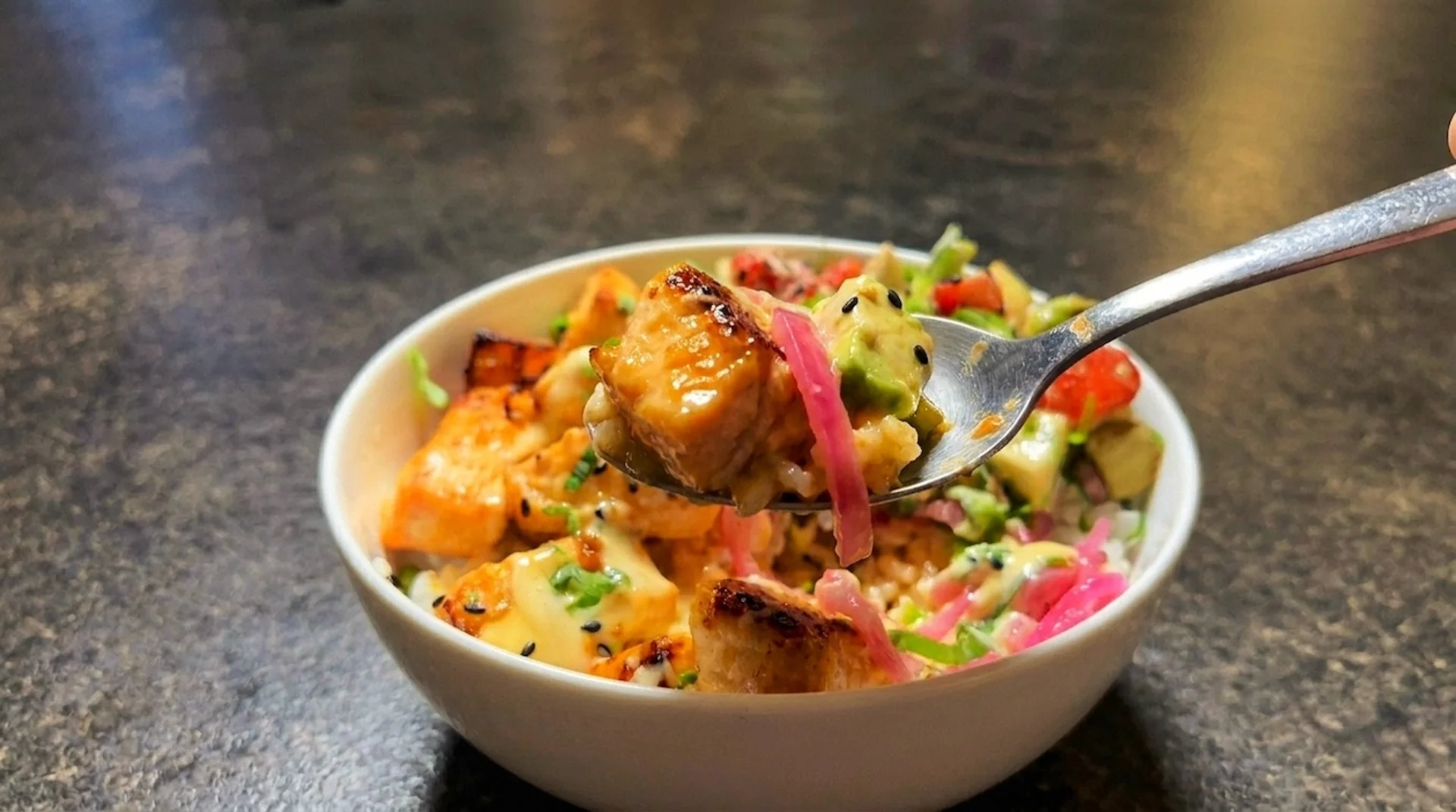
Miso Salmon Bowl
10 minutes
Prep time
10 minutes
Cook time
Ingredients
For the Salmon
- 400 g raw salmon fillet
- 1 tbsp miso paste
- 1 tsp honey
- 1 tbsp sesame oil
- 1 tbsp rice vinegar
- 1 tsp grated ginger
- Black pepper, to taste
- 1/2 tsp soy sauce
For the Pickled Red Onion
- 1–2 red onions, thinly sliced
- 1/2 cup water
- 1/2 cup vinegar
- 1 tbsp sugar
- 1 tsp salt
For the Spicy Mayo Sauce
- 4 tbsp mayonnaise
- 1 tbsp soy sauce
- 1 tsp lime juice
- 1 tsp rice vinegar
- 1–2 tsp sriracha
- 1/2 tsp honey
- 1–2 tsp water, to loosen the sauce
For the Strawberry Avocado Salsa
- 6 fresh strawberries
- 1 avocado
- 1 cucumber
- 1 spring onion
- 1 hot chili pepper
- 1 tsp rice vinegar
- 1 tbsp neutral oil
- Salt, to taste
Other Ingredients
- 200 g cooked sushi rice
- Extra sliced spring onion, for topping
- Fresh coriander, chopped, for topping
Equipment
- Cutting board
- Sharp knife
- Mixing bowls
- Small saucepan
- Baking tray
- Aluminum foil
- Spoon or whisk
- Rice cooker or saucepan for rice
- Oven with broiler function
Instructions
Today I want to talk to you about a recipe I have been thinking about since last year, when I first played with the idea of pairing salmon, miso, and strawberries. But I knew I wanted to wait until strawberries came back into season, because this recipe only makes sense when the fruit is sweet, fragrant, and properly fresh.
This 20-minute miso salmon bowl is built around one simple idea: miso can connect ingredients that might not seem obvious at first. Miso and salmon already make perfect sense together. The salmon is rich and fatty, while miso brings salt, umami, fermentation, and depth. But then I remembered something I tasted in Japan: strawberries with miso. That combination stayed with me because it made the strawberries feel less like dessert and more like part of a savory dish.
So this bowl became my way of bringing those two ideas together. We have broiled miso salmon cubes, sushi rice, quick-pickled red onions, a creamy spicy mayo sauce, and a fresh strawberry, avocado, cucumber, and chili salsa. It is rich, sharp, creamy, crunchy, sweet, salty, spicy, and fresh — exactly the kind of bowl that feels simple, but is actually built with intention.
This is not just another salmon bowl formula. It is a miso salmon rice bowl with strawberries, where every ingredient has a job.
How to Make This 20-Minute Miso Salmon Bowl
Marinate the Salmon
- Cut the salmon into 1.5–2 cm cubes.
- In a bowl, mix the miso paste, honey, sesame oil, rice vinegar, grated ginger, black pepper, and soy sauce. Add the salmon cubes and gently mix until they are well coated.
- Let the salmon marinate for 10–15 minutes. You do not need a long marinade here. The salmon pieces are small, and the miso mixture is strong enough to season the surface quickly.
Broil the Salmon
- Line a baking tray with aluminum foil and place the marinated salmon cubes on top, leaving a little space between them.
- Place the tray under the broiler for 5–10 minutes, depending on your oven and the strength of your broiler.
- You want browned edges, but not dry salmon. The goal is juicy fish with caramelized spots where the miso, honey, and sesame oil have caught the heat.
Prepare the Pickled Red Onion
- Add the water, vinegar, sugar, and salt to a small saucepan. Bring the mixture to a gentle simmer, then add the thinly sliced red onion.
- Simmer the onion on low heat in the pickling liquid for a short time, just until it softens slightly and absorbs the flavor. Drain it and let it cool before adding it to the bowl.
Make the Spicy Mayo Sauce
- In a small bowl, mix the mayonnaise, soy sauce, lime juice, rice vinegar, sriracha, honey, and water.
- Adjust the consistency with 1–2 teaspoons of water until the sauce is loose enough to drizzle.
- The sauce should connect the bowl, not bury it.
Make the Strawberry Avocado Salsa
- Cut the strawberries, avocado, cucumber, spring onion, and chili pepper into small pieces.
- Add them to a bowl with rice vinegar, neutral oil, and salt. Mix gently so the avocado stays mostly intact.
- This salsa is what brings the bowl back to life. The strawberries bring sweetness and acidity, the cucumber adds crunch, the avocado adds creaminess, and the chili keeps everything sharp.
Cook the Sushi Rice
- Cook the sushi rice according to the instructions on the package.
- Once cooked, let it rest for a few minutes before assembling the bowls.
Assemble the Bowl
- Add sushi rice to the base of each bowl.
- Top with the broiled miso salmon, strawberry avocado salsa, and pickled red onions. Drizzle the spicy mayo sauce over everything.
- Finish with sliced spring onion and chopped fresh coriander.
- Serve immediately while the salmon is still warm and the toppings are fresh.
Why Miso Makes This Salmon Bowl Work
This cooked salmon bowl with miso and strawberries works because the ingredients are not just placed next to each other; they are connected through flavor logic. Salmon is naturally rich, fatty, and satisfying. That richness is exactly what makes it delicious, but it also means the rest of the bowl has to bring contrast. If everything around the fish is also soft, creamy, and heavy, the bowl becomes flat after a few bites.
Miso solves the first part of the problem. It gives the salmon salt, umami, and fermented depth. When it is mixed with honey, sesame oil, rice vinegar, ginger, and soy sauce, it becomes a fast marinade that seasons the fish without needing hours of waiting. Under the broiler, the miso and honey help the salmon brown, creating caramelized edges while keeping the center juicy.
But once you cook salmon, the bowl needs freshness. That is where the strawberry salsa comes in. Strawberries may sound unexpected in a savory salmon bowl, but they make a lot of sense when you think about their function. They are sweet, acidic, juicy, and bright. In this salmon bowl with strawberry avocado salsa, they do the same job that mango, pineapple, or citrus often do in rich savory dishes: they cut through fat and bring lift.
The avocado adds creaminess, but because the salsa also has cucumber, chili, rice vinegar, and spring onion, it does not become heavy. The cucumber adds water and crunch. The chili adds heat. The pickled onion adds sharpness. The spicy mayo adds body and connects the rice, salmon, and salsa. Every element has a reason to be there.
That is the whole point of this easy miso salmon bowl recipe: it is not built from a checklist. It is built from a flavor idea.
The Inspiration Behind This Bowl
The inspiration for this recipe started with two flavor memories from Japan. The first was miso with salmon, which already feels familiar and logical. Miso-marinated fish is one of those combinations that makes immediate sense because fatty fish can handle the salty, savory depth of fermented soybean paste. The miso seasons the fish, but it also gives it structure and intensity.
The second memory was more surprising: strawberries with miso. At first, that sounds like a strange pairing. But once you taste it, the logic becomes clear. Strawberries are not only sweet. Good seasonal strawberries also have acidity, perfume, and freshness. Miso takes that sweetness and pulls it into a savory direction. It makes the fruit feel less like a dessert and more like something that can stand next to rich food.
That was the idea I could not stop thinking about. If miso works with salmon, and miso works with strawberries, then miso can become the bridge between them.
That is why this bowl is not just a random mix of salmon and fruit. The miso anchors the salmon, and the strawberries bring freshness back into the bowl. The rice makes it filling, the pickled onion keeps it sharp, and the sauce gives the whole thing a creamy finish.
Nutritionally, this healthy salmon rice bowl with miso is also quite balanced. Salmon brings high-quality protein and healthy fats, including omega-3 fatty acids. Sushi rice provides carbohydrates and makes the dish satisfying. Avocado adds more healthy fats and creaminess. Cucumber, strawberries, spring onion, chili, and coriander bring freshness, fiber, vitamins, and antioxidants. The mayo sauce does make the bowl richer, so this is not an ultra-light salad, but it is a complete and satisfying meal that still feels fresh.
For me, this is exactly the kind of recipe that makes sense for FoodNerd.Kitchen: a familiar format, rebuilt around a clear idea. Not more toppings for the sake of more toppings. Better decisions, better contrast, and one ingredient — miso — holding the whole thing together.
FAQ
Here are a few common questions that can help you adapt this bowl and make the best version at home.
Q: Can I use frozen salmon for this 20-minute miso salmon bowl?
A: Yes, you can use frozen salmon, as long as it is properly thawed before cooking. Pat it dry before cutting it into cubes so the marinade coats the fish well and the salmon browns better under the broiler.
Q: Can I make this salmon bowl without strawberries?
A: Yes. If strawberries are not in season, you can replace them with mango, pineapple, peach, or even orange segments. But when strawberries are ripe and sweet, they work beautifully in this seasonal salmon rice bowl because they bring both sweetness and acidity.
Q: Why do strawberries work with salmon?
A: Strawberries work with salmon because they bring brightness, acidity, and freshness against a rich, fatty fish. In this recipe, miso is the connector. It works with the salmon, and it also pulls the strawberries into a more savory direction.
Q: Can I meal prep this miso salmon rice bowl?
A: You can prep some parts ahead. The pickled onion, spicy mayo sauce, cooked rice, and chopped vegetables can be prepared in advance. However, the salmon is best broiled close to serving, and the avocado should be cut fresh so it does not oxidize.
Q: What can I use instead of sushi rice?
A: Sushi rice gives the bowl a slightly sticky, satisfying base, but you can also use jasmine rice, brown rice, or even quinoa. The texture will change, but the flavors will still work.
Conclusion
I hope you will test this 20-minute miso salmon bowl and tag us along when you do. It is rich, fresh, sharp, creamy, and a little unexpected — but every ingredient has a job, and that is why the combination works.
The full video of the recipe is available on YouTube, so check it out, and don’t forget to like and subscribe.
Nutrition Facts / Serving
- Calories: 860 kcal
- Total Fat: 48.3 g
- Cholesterol: 80 mg
- Sodium: 963 mg
- Potassium: 1,043 mg
- Total Carbohydrate: 67.9 g
- Sugars: 10 g
- Protein: 34.7 g